Preserves · Austin
Wild Basin Wilderness Preserve above Bee Creek
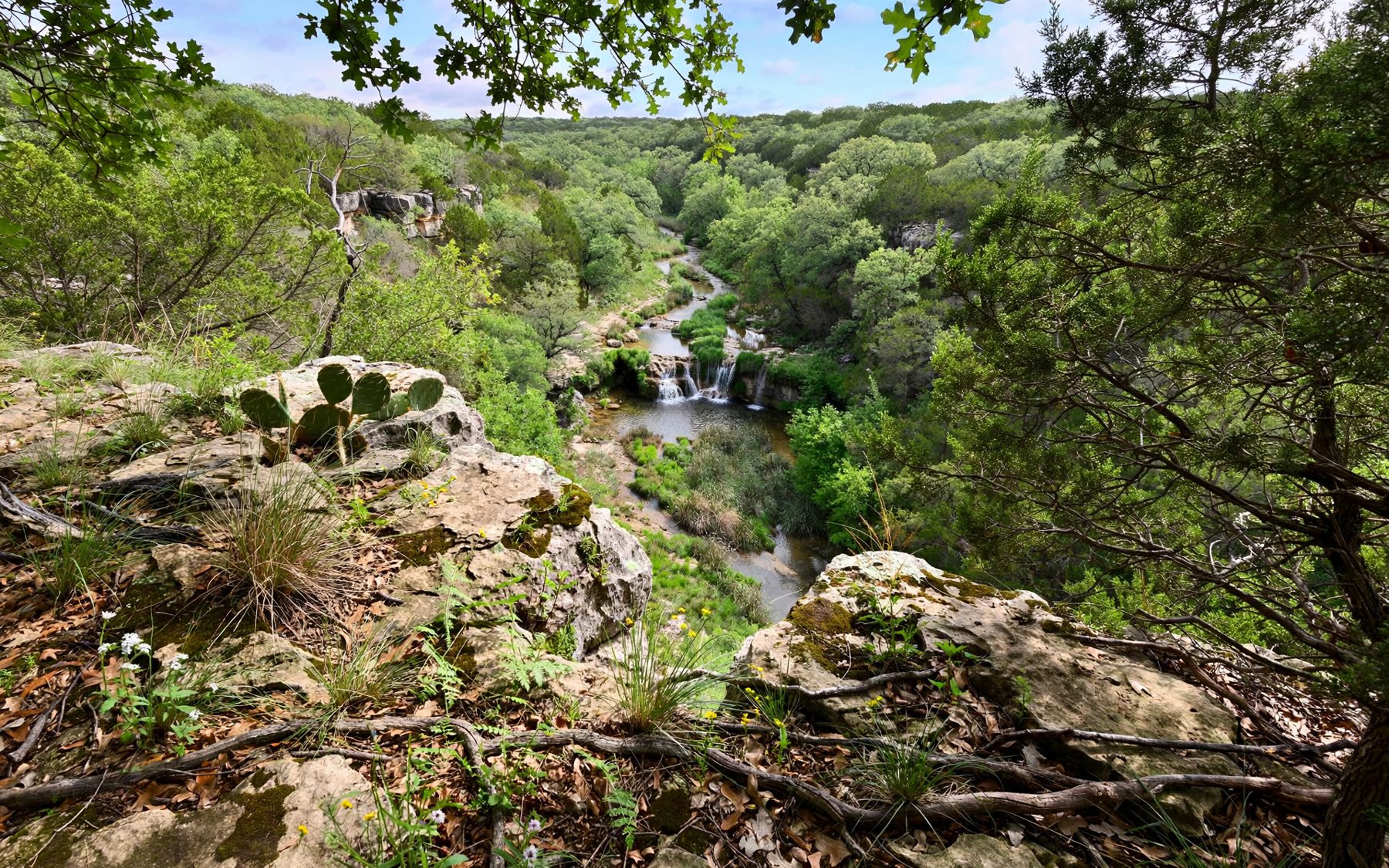
A small preserve off Loop 360 drops from a ridge-top car park into the canyon of Bee Creek, with a waterfall after rain and views over the hills. Quiet, short and strictly protected.
Saved by a neighbourhood campaign
In the 1970s, as Austin began spreading west into the hills along the new Loop 360, a group of local women set out to save one patch of canyon country from development. They raised money, lobbied officials and persuaded landowners, and the land they secured became Wild Basin Wilderness Preserve: a couple of hundred acres of ridges and creek valley, now surrounded by highways and houses but still wild at its heart.
The preserve is now managed by a university in Austin as a place for research and education, and it is part of the network of protected land in the Balcones Canyonlands Preserve. Its rules reflect that purpose. It is a nature preserve first and a hiking spot second.
How the trails run
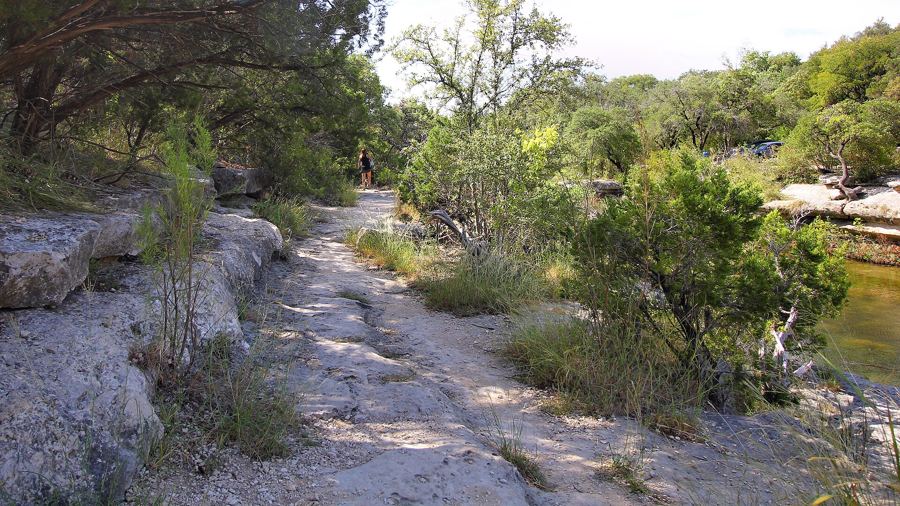
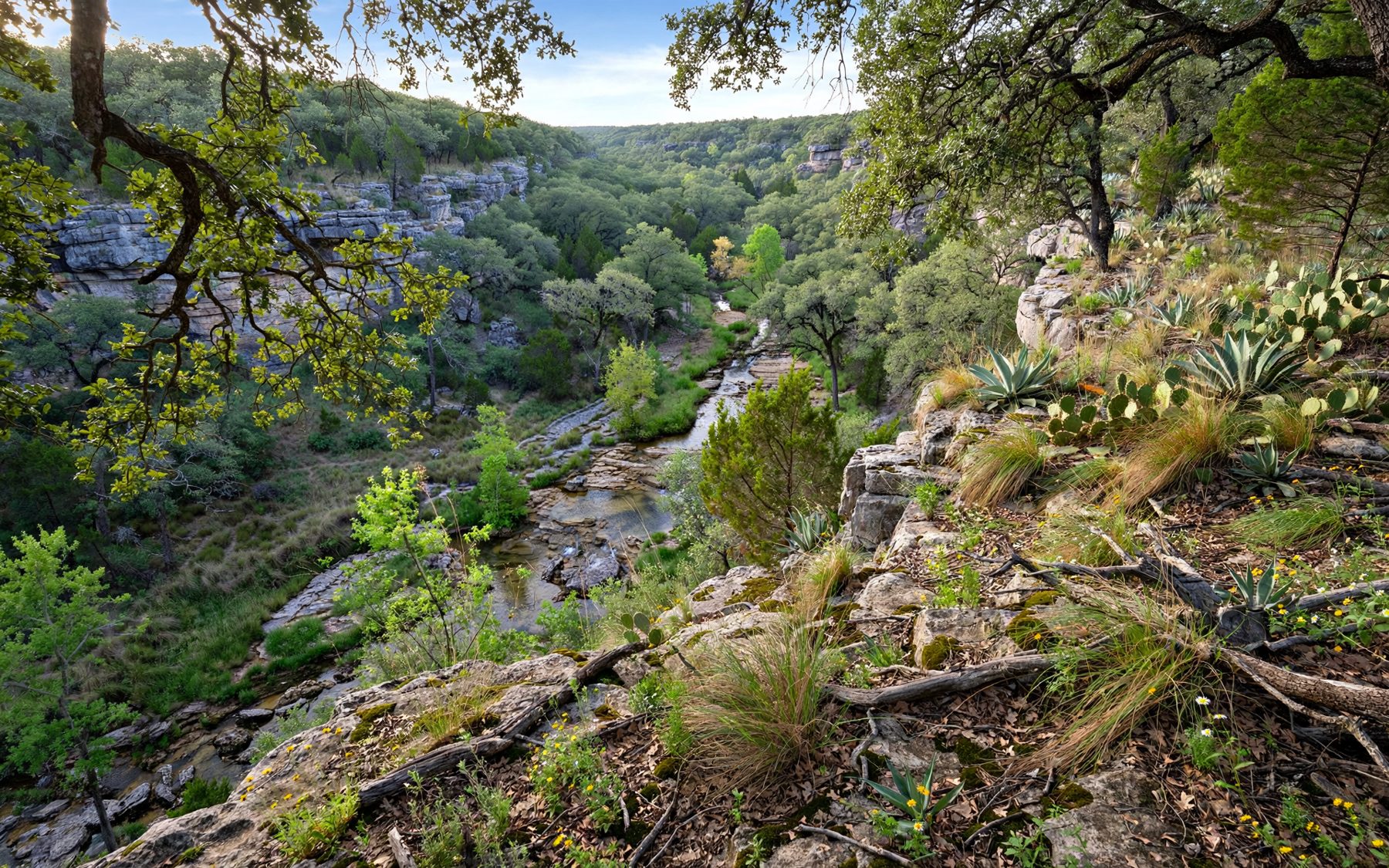
Wild Basin is small enough to explore in a morning. About two and a half miles of trails start from a car park and education building on the ridge beside Loop 360 and wind down into the canyon of Bee Creek. The upper paths cross open, rocky ground with junipers, oaks and wide views over the surrounding hills. The lower paths follow the creek through shaded woodland.
The trails are well marked but narrow, with stone steps, loose rock and some steep pitches. Walking down is easy; climbing back up to the car park on a warm day is the real effort. Allow time and take it slowly.
Benches and viewpoints along the upper loop look out across the rolling, wooded country west of Austin. On a clear winter day you can see ridge after ridge fading into blue, and it is a good place to understand the shape of the Balcones Escarpment: the sharp edge where the flat land to the east meets the dissected hills to the west. The fault line that created it runs just to the east of here, and the creeks have been cutting into the raised side ever since.
Bee Creek and the waterfall
At the bottom of the canyon, Bee Creek flows over limestone ledges. After a good rain, it spills over a ledge in a small waterfall, the preserve's best-known sight. In dry spells the falls shrink to a trickle or stop altogether, and the creek becomes a chain of still pools. Both are worth seeing, but if the waterfall is your goal, go within a few days of a decent rain.
Swimming and wading are not part of a visit here. The creek is protected, and the preserve asks visitors to stay on trails and out of the water so the banks and the plants along them can recover.
Rules that keep it wild
Wild Basin is stricter than a city park, and the rules are posted at the entrance:
- Pets are not allowed on the trails.
- Bicycles are not allowed; this is a footpath preserve.
- Stay on marked trails; much of the land is closed to protect plants and nesting birds.
- Leave flowers, rocks and fossils where they are.
- Hours are limited to daylight, and the preserve sometimes closes for events or management.
Parking is limited and fills quickly at weekends. Cars parked along the highway are a danger on Loop 360, so if the lot is full, come back another time. Check the preserve's current hours and any visitor guidelines before you go.
The preserve also runs guided walks, talks and educational programmes for schools and the public at times, which are a good way to learn more about the plants, birds and geology from people who study them. The education building near the car park has displays when it is open.
What lives here
The juniper and oak woodland at Wild Basin is habitat for the golden-cheeked warbler, the endangered songbird that nests only in central Texas. Listen for its buzzy song from the treetops between March and early summer. Other birds are common too: titmice, wrens, cardinals and, in the open sections, scrub jays and painted buntings.
The plant life changes with the ground. On the dry ridges, prickly pear, agarita and sotol grow among the rocks. In the canyon, sycamores and maidenhair ferns cling to damp ledges near the creek. In spring, wildflowers bloom along the upper trails, from bluebonnets and paintbrush in good years to the purple clusters of prairie verbena.
Best times to visit
Spring is the high point: wildflowers, warblers and usually some water in the creek. Autumn brings cooler weather and, after rain, a revived waterfall. Summer is hot on the ridge; arrive at opening time and be out by late morning. Winter is quiet and often clear, with good views through the bare oaks.
Adding it to a morning
Wild Basin is on the southern edge of this guide's territory, a short drive down Loop 360 from the Lakeline area. It pairs well with Bull Creek District Park, just to the north on the same road, where you can wade and swim after a hike in the preserve. For a wider look at the same kind of country, the Doeskin Ranch trails in the Balcones Canyonlands refuge offer more open prairie and longer views.
Above all, Wild Basin shows how much can be saved by a few determined people. Standing in the canyon, with the highway out of earshot and the creek running over the ledges, it is easy to imagine how much of Austin's western hills looked like this not so long ago.