Trailhead towns · Georgetown
Georgetown's square and the river below it
Thirty minutes north of Lakeline, Georgetown keeps a restored courthouse square of limestone and brick, with a river path a few blocks downhill and a big lake on the west side.
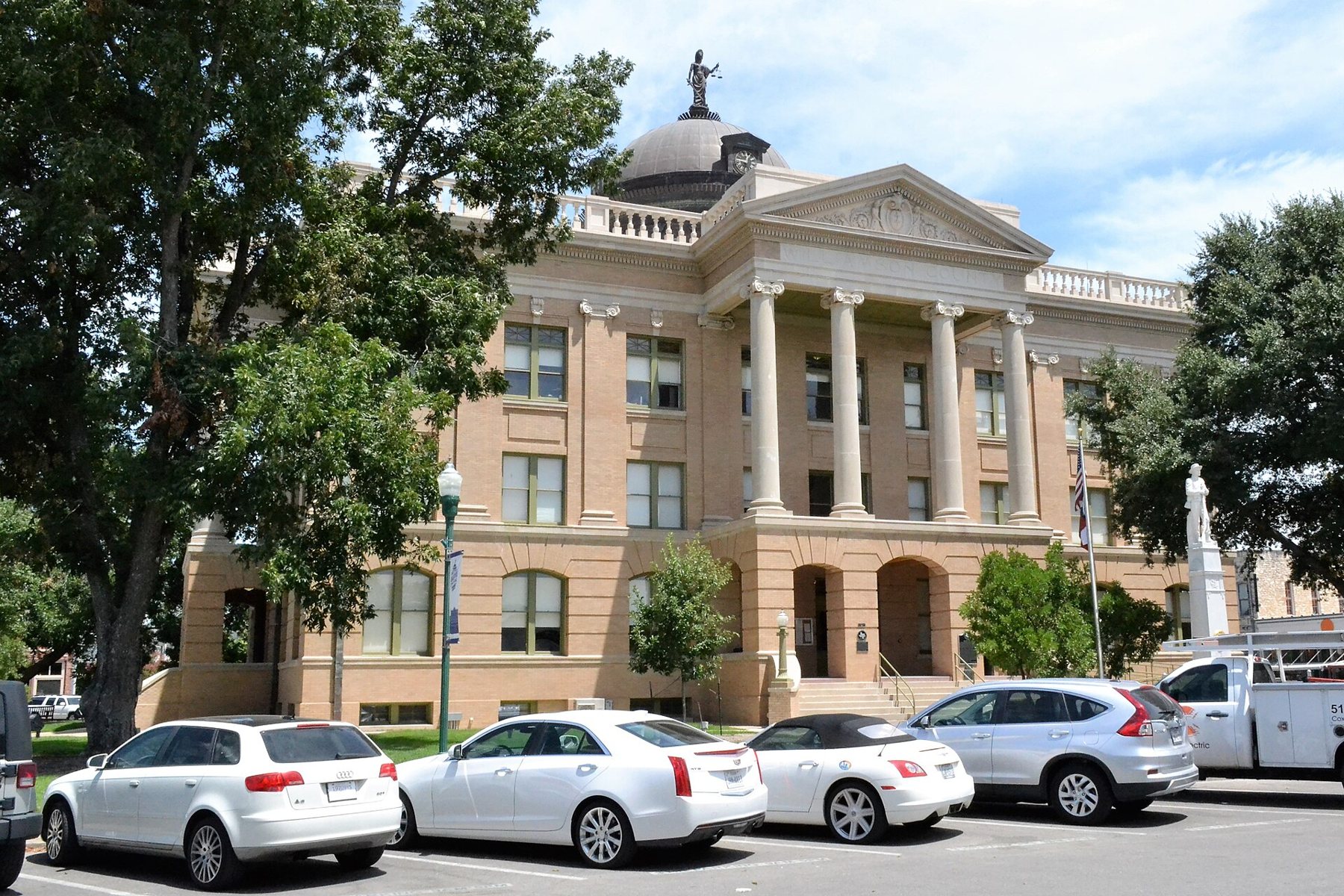
Of the towns on this board, Georgetown is the one with a centre you would walk for its own sake. The seat of Williamson County keeps a nineteenth-century commercial square around a grand domed courthouse, and two forks of the San Gabriel River meet just below it. Add a large reservoir on the west side of town and you have the most complete base for a day outdoors north of Austin.
The courthouse and its square
Georgetown was laid out in 1848 on land donated by George Washington Glasscock, and the town was named for him. The square grew up around a series of courthouses, and the one standing today was completed in 1911: a Neoclassical building of pale stone with columns, a dome and a statue of Justice on top.
Like many Texas courthouses it was altered in the mid-twentieth century, losing some of its original details. A careful restoration finished in 2007 brought back its earlier look, and it now anchors one of the best-preserved Victorian downtowns in the state. The San Gabriel river path is only a few blocks away, but give the square time first.
Reading the storefronts
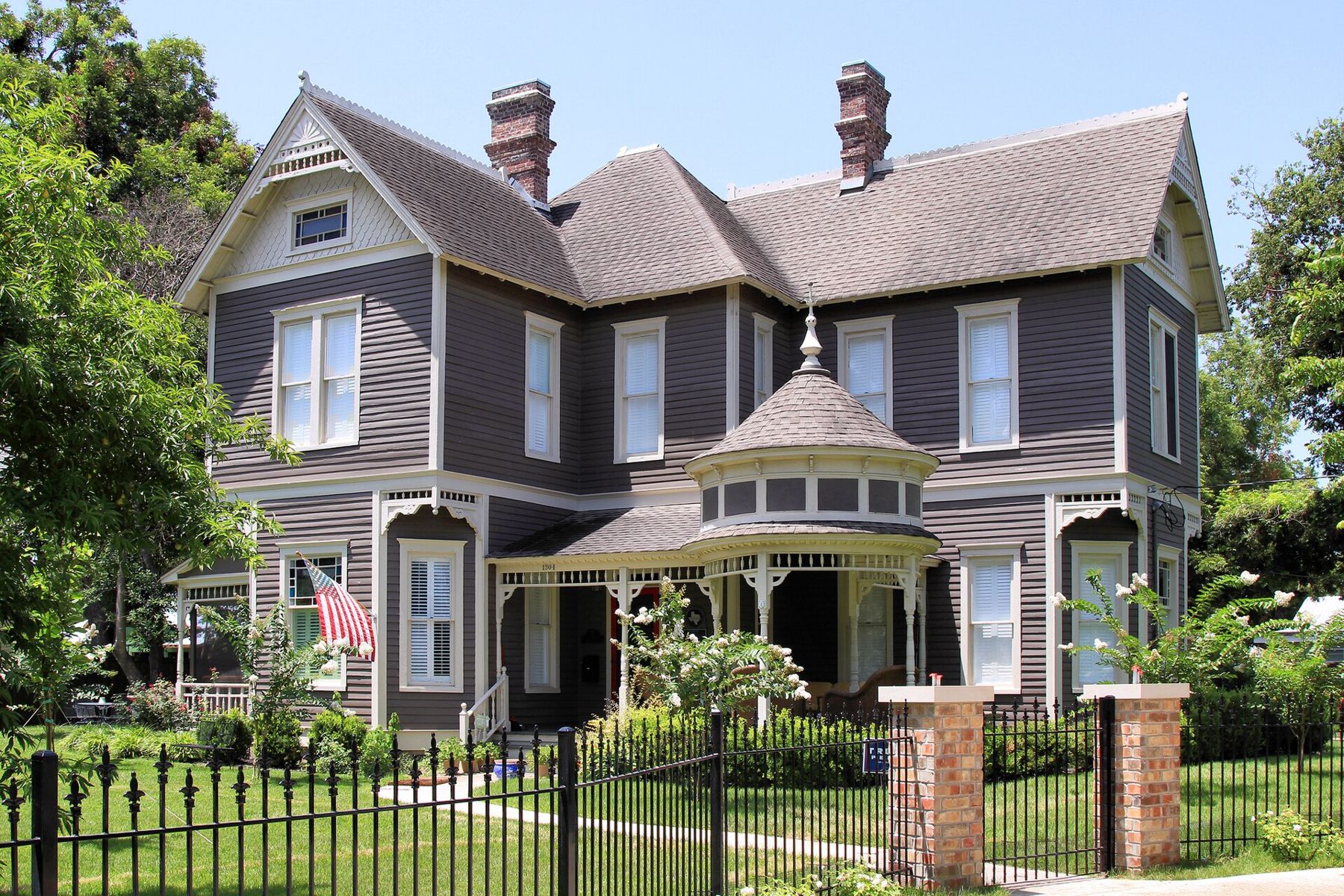
The buildings around the square date mostly from the 1880s to the early 1900s, when Georgetown prospered as a cotton and county town. Many have ornate pressed-metal or cast-iron fronts, tall windows and decorative cornices, and they were saved and restored from the 1980s onward as part of a long effort to revive the downtown.
Walk the four sides slowly and look up. Above the modern shop signs you will find old names, dates and painted lettering. A circuit of the square and the blocks just off it is an easy mile on level pavement, with shade from awnings rather than trees.
Inside the courthouse, the restored halls and courtroom show the craftsmanship of the period, and as a working county building it has usually been open to the public on weekdays. Opening arrangements change, so treat a look inside as a bonus rather than a plan.
Above the modern shop signs you will find old names, dates and painted lettering.
Victorian streets and red poppies
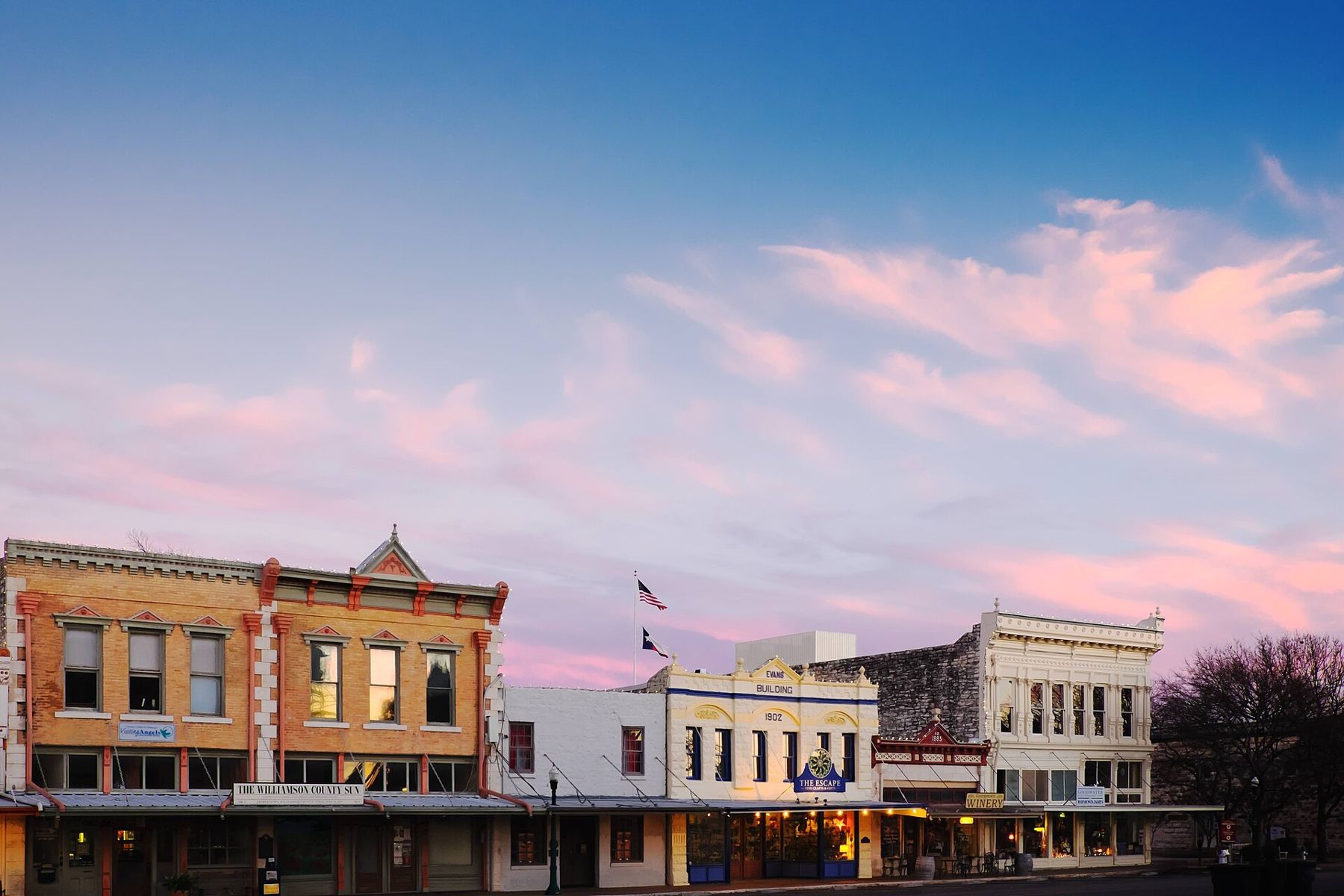
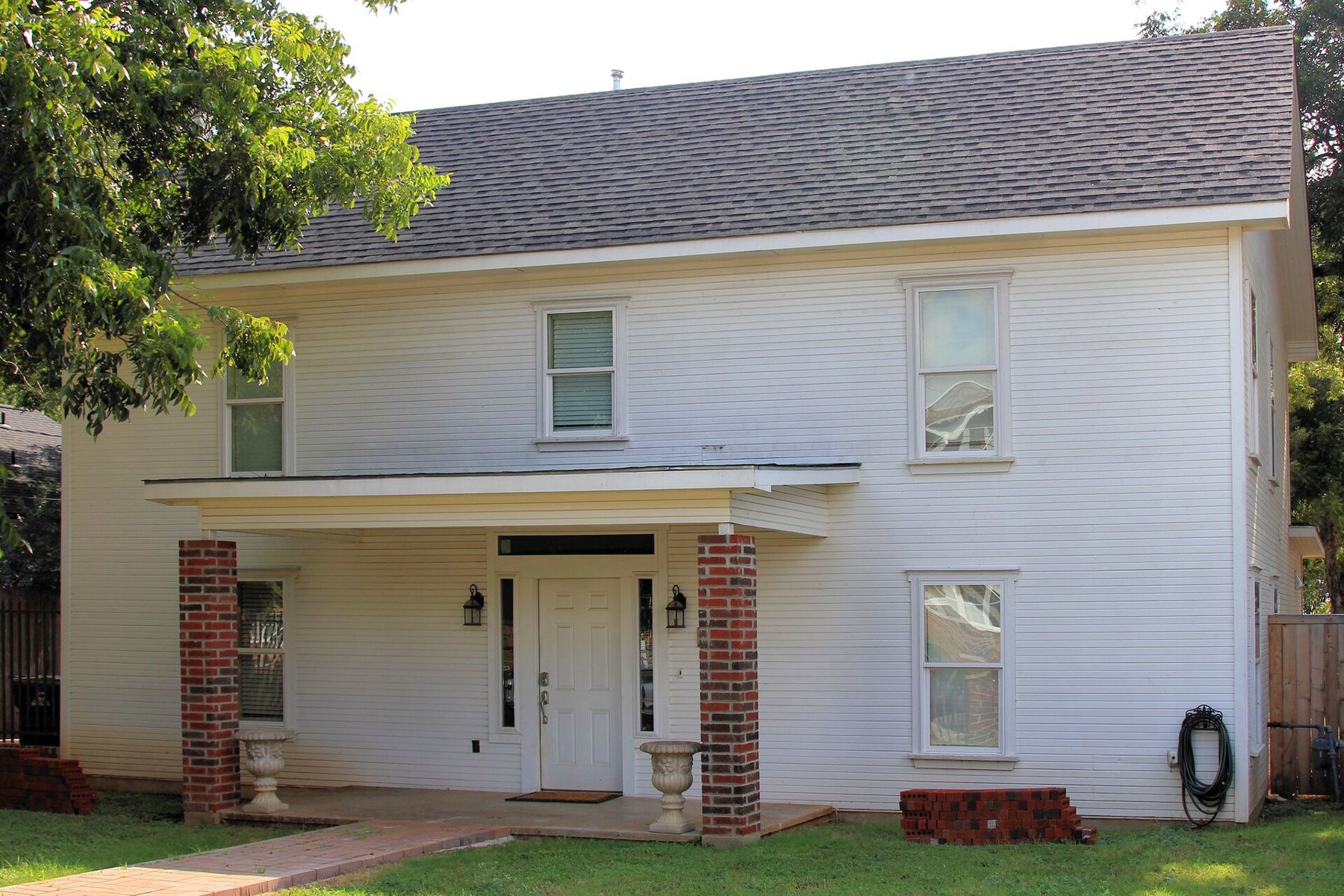
Beyond the square, the older residential streets hold a large collection of historic houses, from simple limestone cottages to elaborate Victorian homes with turrets and wraparound porches. Many carry historical markers. Walking them is a pleasant hour in itself, and on spring mornings it is the best way to see one of the town's quirks.
Georgetown is known for its red poppies. The flowers seed themselves along fences, in front gardens and on verges in older neighbourhoods, and in April they bloom in bright patches that the town celebrates each spring. They are a cultivated tradition rather than a wild display, but they suit the old streets well.
East of the square, a short walk across the residential grid, lies the campus of Southwestern University. Its roots go back to a college chartered in 1840, and it settled in Georgetown in the 1870s, which lets it claim to be the oldest university in Texas. The older campus buildings are of local limestone, with towers and arched entrances, and the tree-shaded grounds make a calm detour on a hot day. It is a working campus, so keep to the paths and give way to students and classes.
Downhill to the water
A few blocks from the square, the land drops to the San Gabriel River. Here the north and south forks come together, and the city has built a network of parks and paths along the water. Blue Hole Park, just below downtown, is the favourite: a deep, clear pool under a limestone bluff, cool even in summer and popular for swimming. Rules on swimming, glass and pets are posted, and parking near the park is tight on hot weekends.
Downstream, San Gabriel Park spreads out with big pecan and oak trees, picnic areas and access to the river trail. The trail follows the water for several miles in sections, partly paved and partly gravel, with shade under the trees along the banks. It is an easy, flat walk and a good choice for a family morning.
The river corridor is also one of the better places near Austin to watch birds in an ordinary morning. Kingfishers rattle along the banks, herons stand in the shallows below the low dams, and in winter ducks gather on the slower pools. Limestone ledges show fossils in places, the shells of creatures from the shallow sea that once covered this part of Texas. Leave them where they lie for the next walker.
After heavy rain the river rises fast. Low crossings on the trail can flood, and current at the pools becomes dangerous. Stay out of high water and follow any closures.
Out to the lake
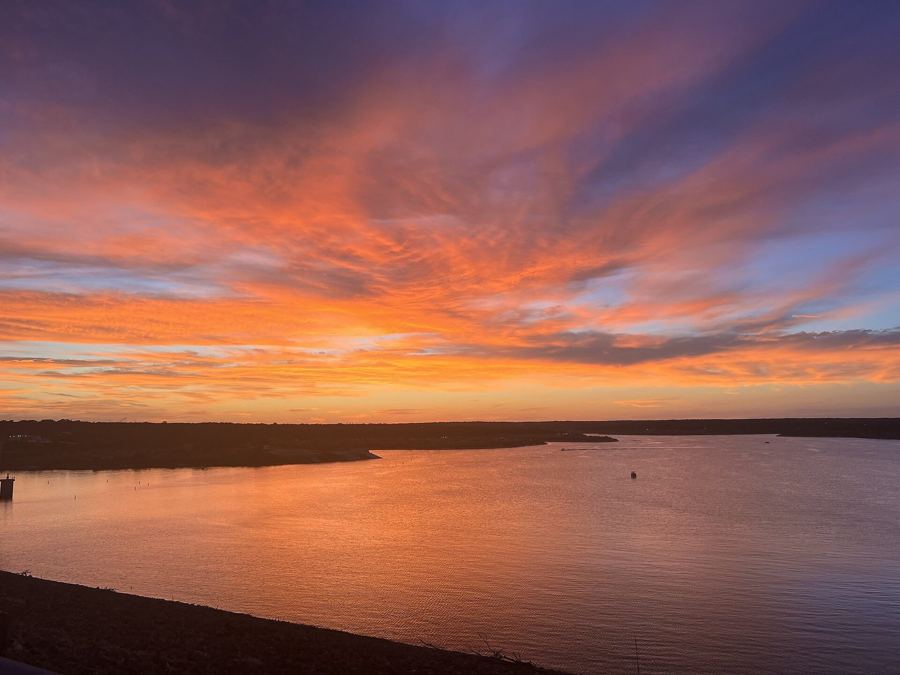
West of town, the North Fork of the San Gabriel is held back by the dam that forms Lake Georgetown, a reservoir run by the U.S. Army Corps of Engineers. Its shoreline parks offer swimming, boat ramps and campsites, and the long Goodwater Loop trail circles the whole lake. For most visitors a section of that trail, or an evening at one of the lakeside parks, makes a good second half to a day that starts on the square.
Together the square, the river and the lake give you three quite different landscapes within a short drive: Victorian stone, shaded river bottom and open limestone shore.
Coming from Lakeline
From the Lakeline end of Austin, Georgetown is about half an hour by road, either up through Cedar Park and east on Highway 29 or round on the interstate. Traffic on I-35 is heavy at peak hours, and the back route through the edge of the hills is often more pleasant.
Come early in summer, when the square is still cool and the river is quiet. Spring brings the poppies and wildflowers along the roadsides, and the weeks before Christmas, when the square is lit up, are a good time for an evening stroll.
A full day might run like this: coffee and a slow lap of the square while the shopfronts are still shuttered, a walk through the Victorian streets to the university and back, then down to Blue Hole and along the river before the heat builds. After a long lunch break indoors, drive west to the lake for a late-afternoon swim or a short section of shoreline trail, and finish with the sunset over the water.
Whenever you come, start at the courthouse and let the land lead you downhill to the water, the way the town itself grew.