Dammed water · Burnet County
Inks Lake State Park: pink granite and clear water
An hour north-west of Lakeline, the Hill Country's limestone gives way to pink granite. Inks Lake fills the gaps between the boulders with clear, steady water.
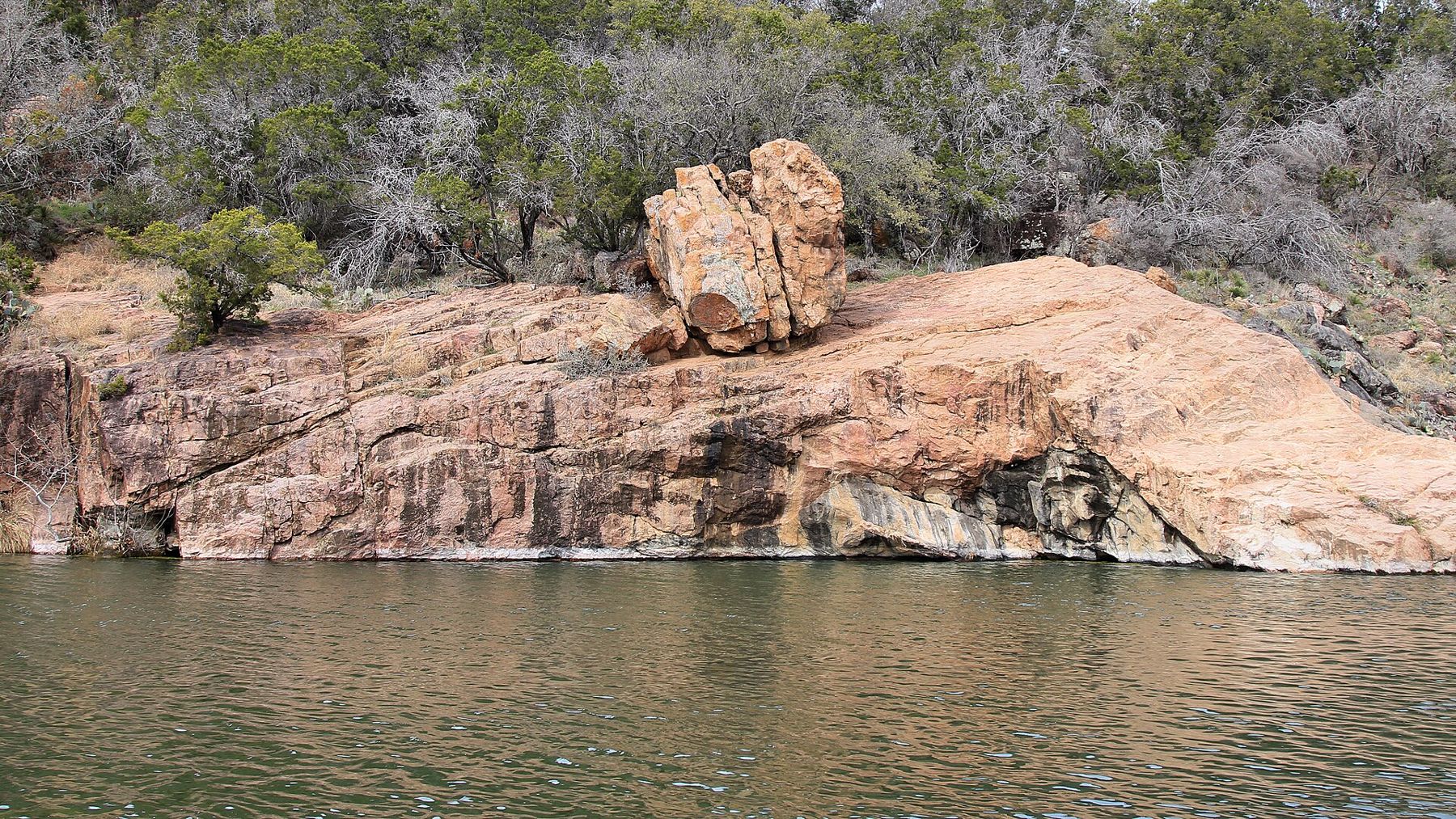
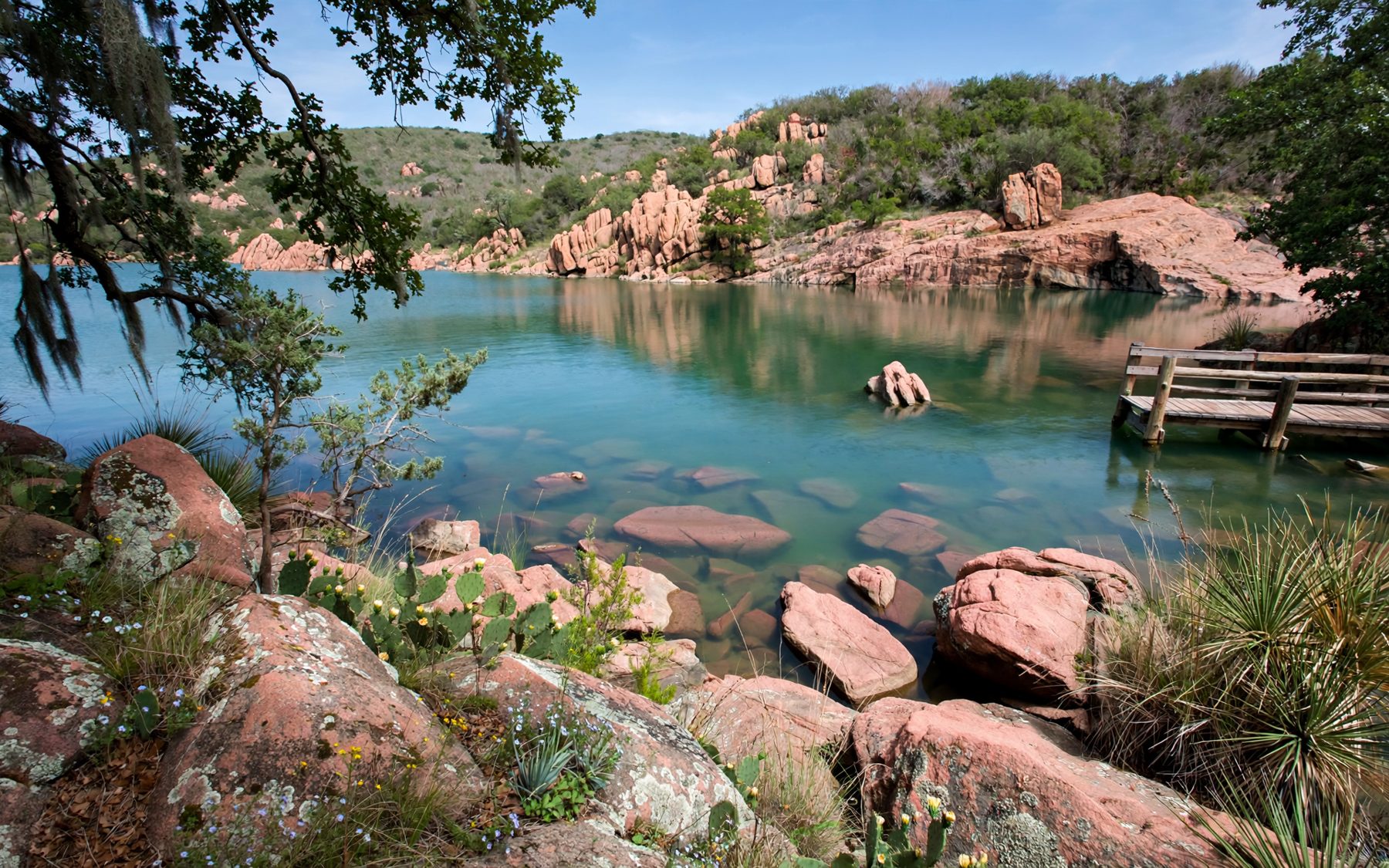
Drive north-west from Cedar Park and the land changes in a way you can see. The pale limestone of the Balcones country gives way to rounded humps of pink and grey rock, much older than anything around Austin, poking out of the scrub. Inks Lake State Park sits in the middle of this granite country, on a narrow reservoir of the Colorado River, and it is one of the best places within reach of northwest Austin to swim, paddle and scramble on bare rock.
Old rock in a young lake
The granite and gneiss here belong to the Llano Uplift, a dome of ancient rock that rises through the younger limestone layers of central Texas. These are some of the oldest rocks in the state, formed deep underground over a billion years ago and only later exposed at the surface. They weather into smooth domes, boulders and pink gravel, and they give the park its colours.
You do not need to be a geologist to notice the difference. Pick up a handful of the coarse pink gravel on the trail and you can see separate grains of quartz, feldspar and dark mica glinting in the sun. Around Austin, by contrast, almost everything is pale, fine-grained limestone laid down in shallow seas. Standing on the granite at Inks Lake, you are looking at the deep basement of Texas, worn down over immense spans of time and finally laid bare by erosion.
The lake is far younger. Inks Dam was finished in the late 1930s as one of the Highland Lakes, the chain of reservoirs that the Lower Colorado River Authority built for flood control, water supply and power. Unlike Lake Travis, whose level can rise and fall by many feet between floods and droughts, Inks Lake is held at a fairly constant level. That steadiness is part of its appeal: the shoreline and the swimming spots look much the same from year to year.
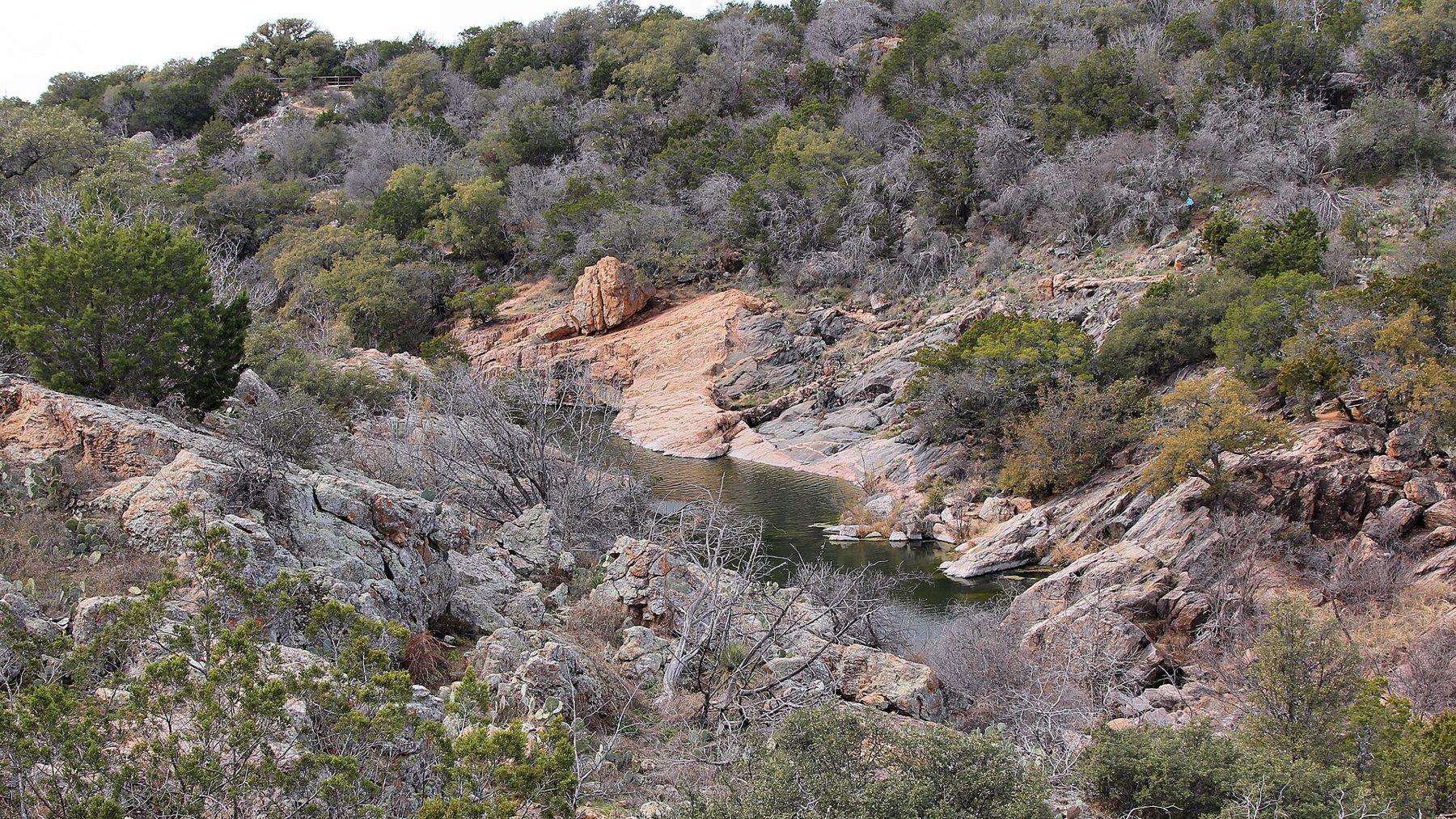
Devil's Waterhole
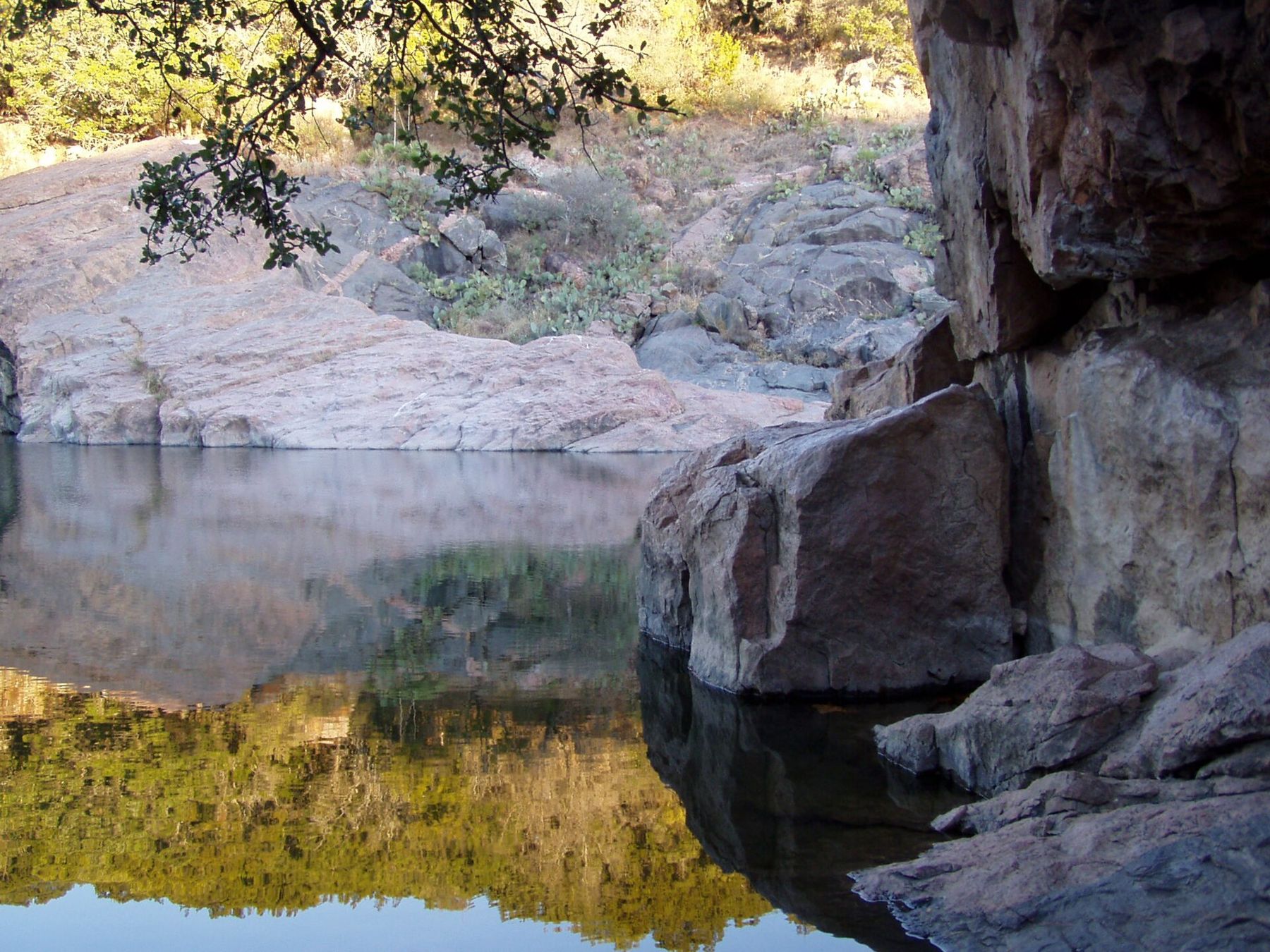
The best-known corner of the park is Devil's Waterhole, a deep, rock-lined cove where a creek enters the lake. Pink granite ledges surround the water, and in summer it is the park's busiest place. People swim, sit on the warm rock and paddle in from the main lake.
The ledges tempt people to jump. Rock edges hide shallow spots and submerged boulders, water depth changes, and people are hurt here. Park staff discourage cliff jumping, and the posted rules on the day are the ones to follow. Swim within your ability; there are no lifeguards.
The granite holds the day's heat long after the sun has gone, and the rock is often warm to sit on at dusk.
Trails over bare rock
The park has roughly seven and a half miles of hiking trails, a mix of short loops and longer connecting paths. Much of the walking is over open granite and gravel, with junipers and oaks in the hollows. Trail markers are painted on the rock in places, and on the bare domes it is worth looking for them before you set off downhill.
The rewards are the views from the higher outcrops across the lake and the surrounding hills, and the strangeness of the ground itself: sparkling, coarse rock underfoot, lichen in orange and green, and small pools where rain collects. The granite holds the day's heat long after the sun has gone, and the rock is often warm to sit on at dusk.
There is little shade on the high ground. In summer, walk early, wear a hat and carry water even for a short loop. Granite is grippy when dry but can be slick when wet or covered in loose gravel.
Afloat on the lake
A narrow, winding lake with a steady level is good for small boats. Kayaks, canoes and paddleboards are common, and the park has rentals at times; check what is available before you count on it. Paddling up the arms of the lake takes you past granite banks and coves you cannot reach on foot.
Fishing from the bank and from boats is popular, and the usual Texas fishing licence rules apply. Motorboats share the lake, so stay visible and keep to the edges in narrow stretches.
Nights on the granite
Inks Lake is a camping park as much as a day trip. Campsites sit along the shore and in the woods behind it, from basic tent pitches to sites with water and electricity, plus a few small cabins. Many are within a short walk of the water, which means an evening swim and a morning paddle without getting back in the car. Sites are booked through the state parks reservation system and the lakeside ones go first, especially for spring and autumn weekends.
The park is far enough from the city for the night sky to open up on clear evenings, and the granite outcrops make a natural place to sit and watch it. Bring a red-light torch if you walk the trails after dark, and watch your footing on the rock.
Wildlife is easy to see. White-tailed deer graze around the campgrounds at dawn and dusk and are used to people; do not feed them. Herons and egrets work the shallows, turkey vultures ride the warm air over the rock, and in spring the scrub fills with songbirds. Watch where you put your hands on the granite ledges: snakes, including rattlesnakes, are part of the Hill Country, though they usually move away from people.
When to go to the granite
Inks Lake is one of the most visited parks in central Texas, and on summer weekends and holidays it can reach capacity. Day passes and campsites can be reserved through the state parks system, and booking ahead is the safest way to avoid being turned away at the gate. Weekday mornings are calmer.
Spring brings wildflowers in the open, rocky ground and comfortable hiking weather; autumn is warm enough to swim into October in many years. Summer is for early hikes and long swims. Winter is quiet, with clear light on the rock, though the water is cold.
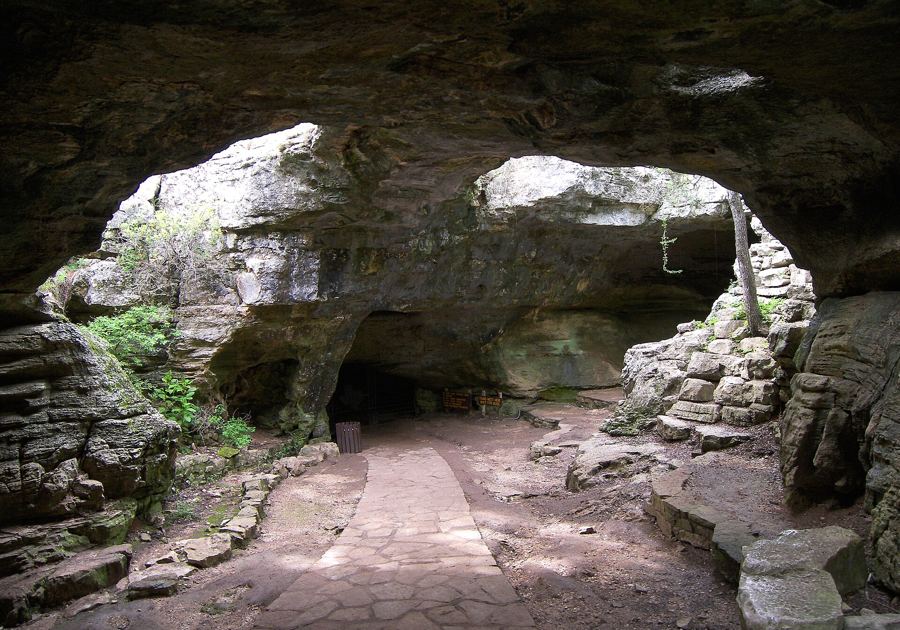
The park sits close to Longhorn Cavern State Park, which makes for a good pairing on a hot day: rock and water in the morning, a cool underground walk at midday. From the Lakeline end of Austin the drive is a little over an hour through Leander and up Highway 29, past the turn for Doeskin Ranch if you want to add a prairie walk.
Bring water shoes for the rocky shore, sun protection and more drinking water than seems necessary. The combination of granite, sun and clear water is unlike anywhere closer to the city, and it is worth the drive to see the Hill Country's foundations laid bare.