Creeks · Austin
Bull Creek Greenbelt: limestone shelves and swimming holes
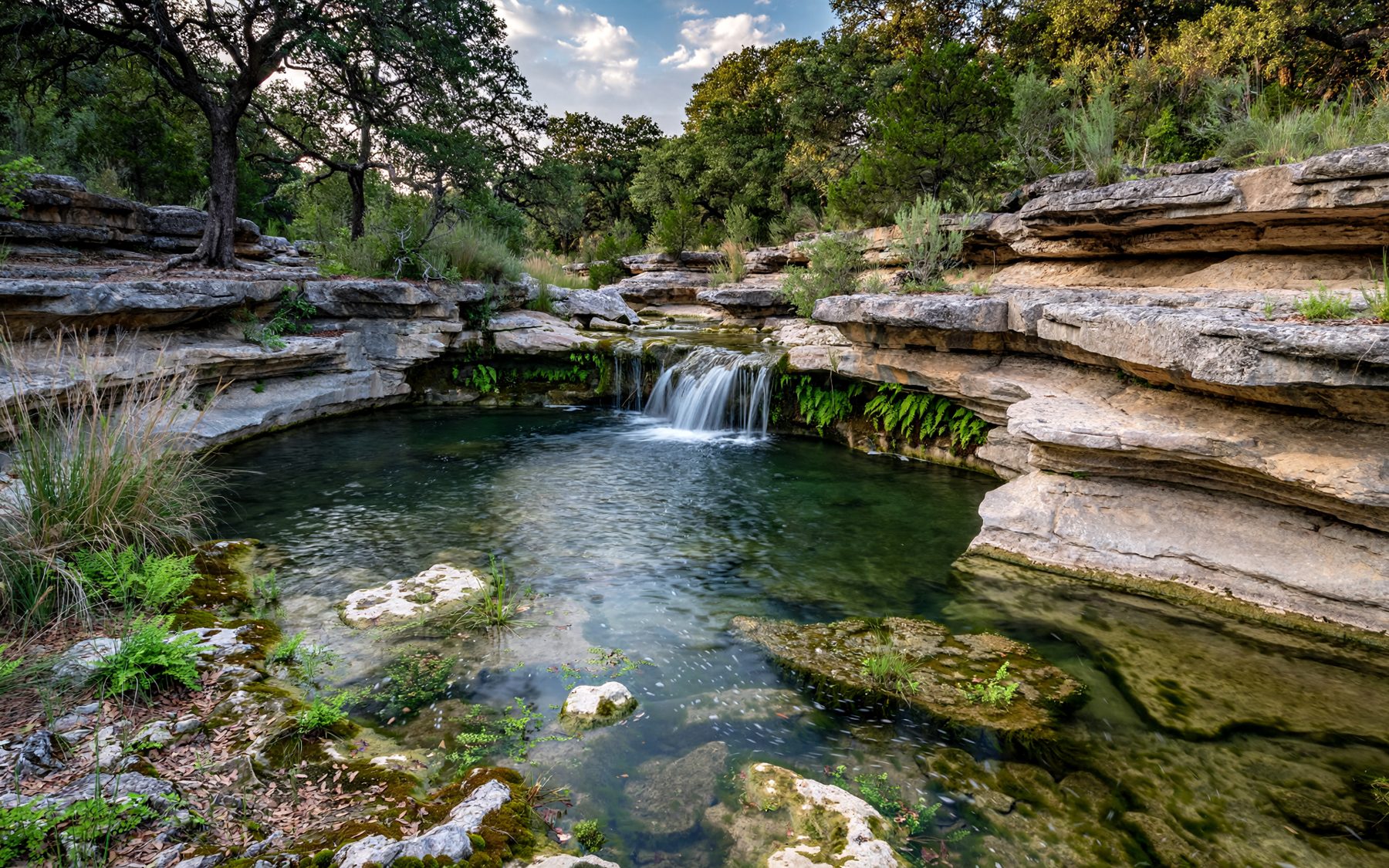
Bull Creek runs clear over pale limestone shelves through northwest Austin. A trail follows it upstream from the district park, crossing the water again and again under cedar and oak.
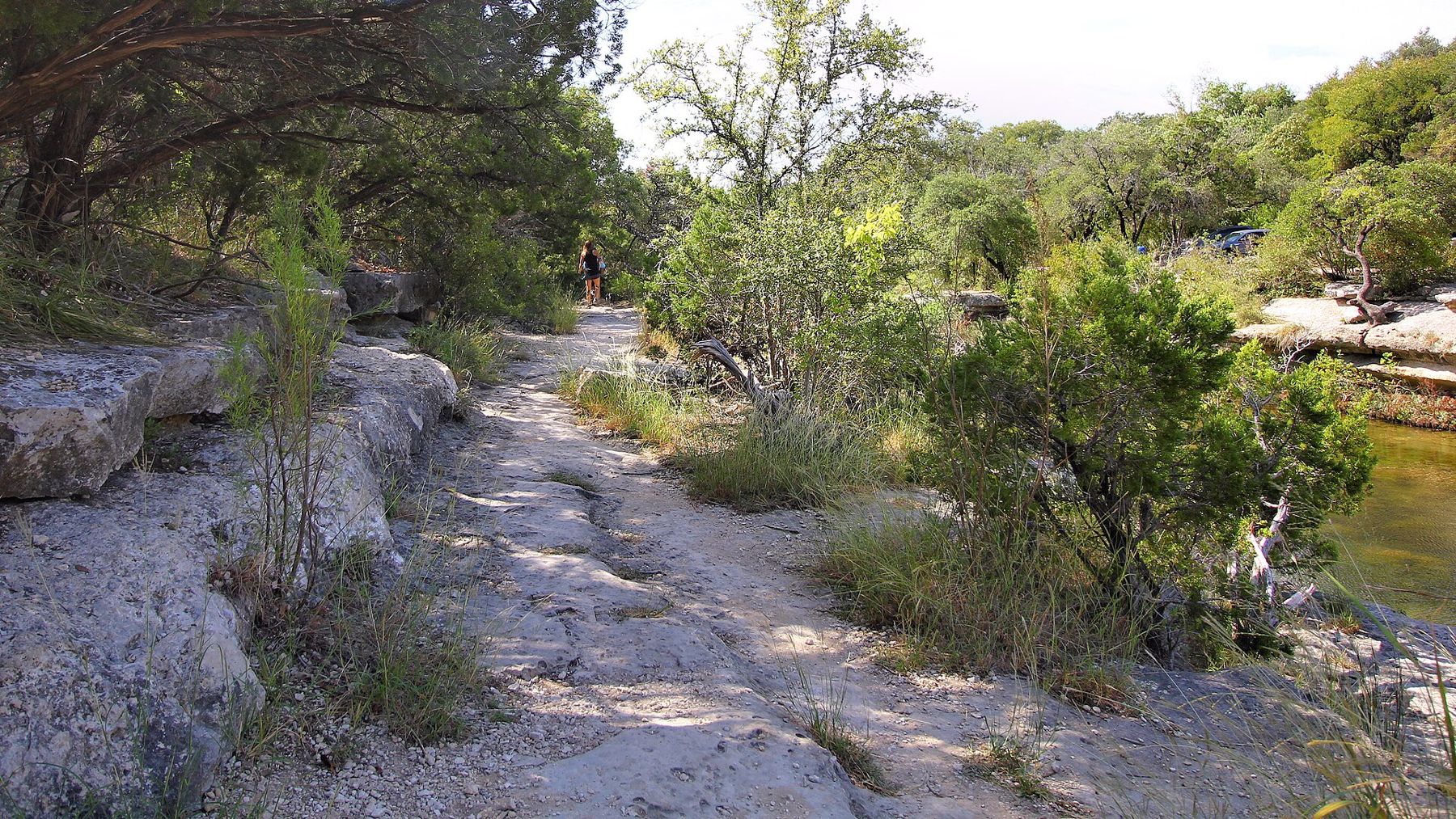
Bull Creek is the creek most northwest Austin families know first. It rises in the hills near the Lakeline end of town, gathers springs as it runs south through wooded valleys, and empties into Lake Austin. Along the way it flows over broad shelves of pale limestone, drops over small ledges and pools in deep green holes. A string of public parks and a greenbelt trail let you follow a good stretch of it on foot.
The first stretch
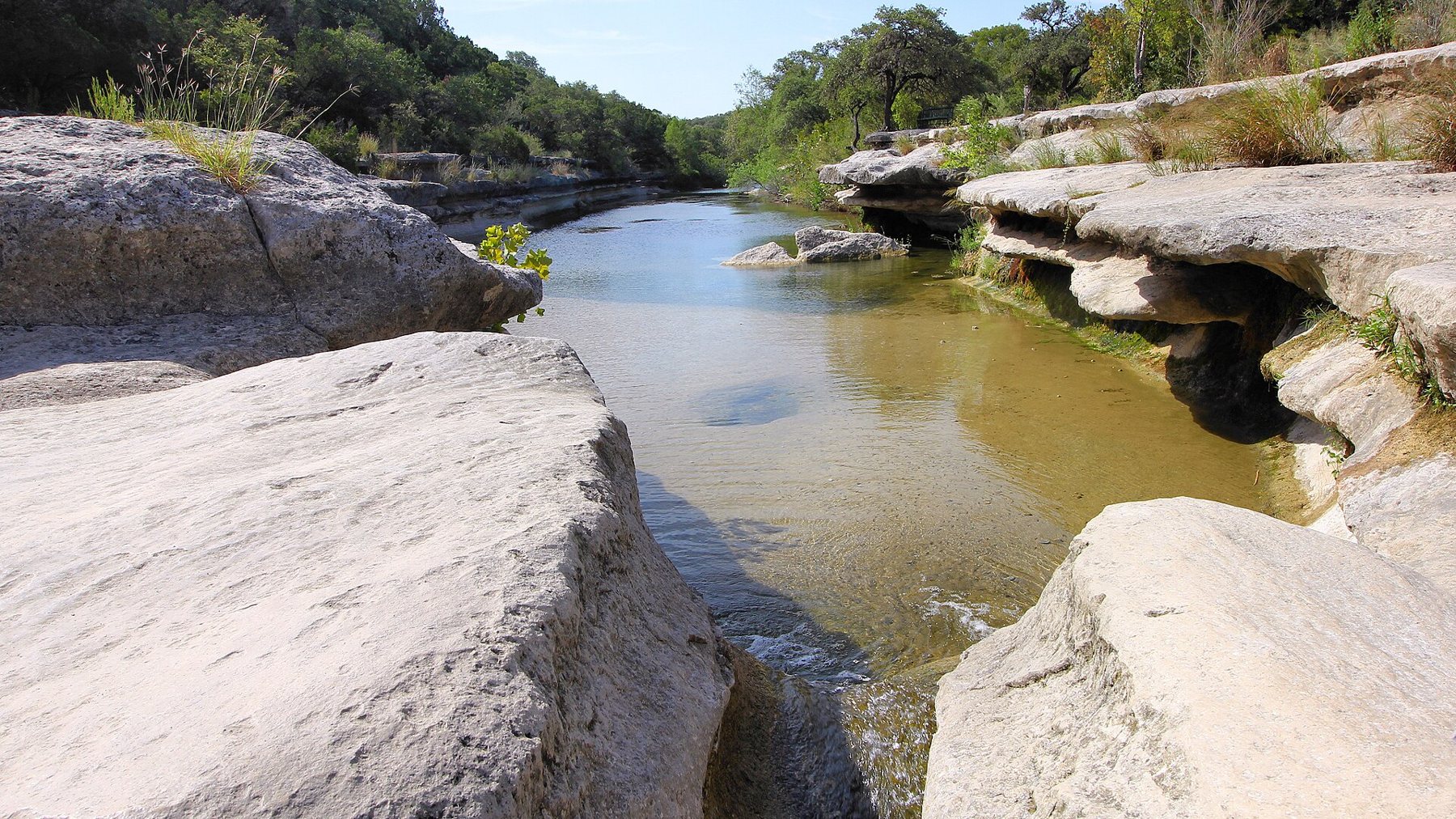
The usual starting point is Bull Creek District Park, on the west side of Loop 360, the winding highway that the city calls the Capital of Texas Highway. Here the creek runs right beside the parking area over flat limestone slabs, with small cascades and pools where children wade and dogs splash. On a warm weekend it is one of the busiest places in this part of the city.
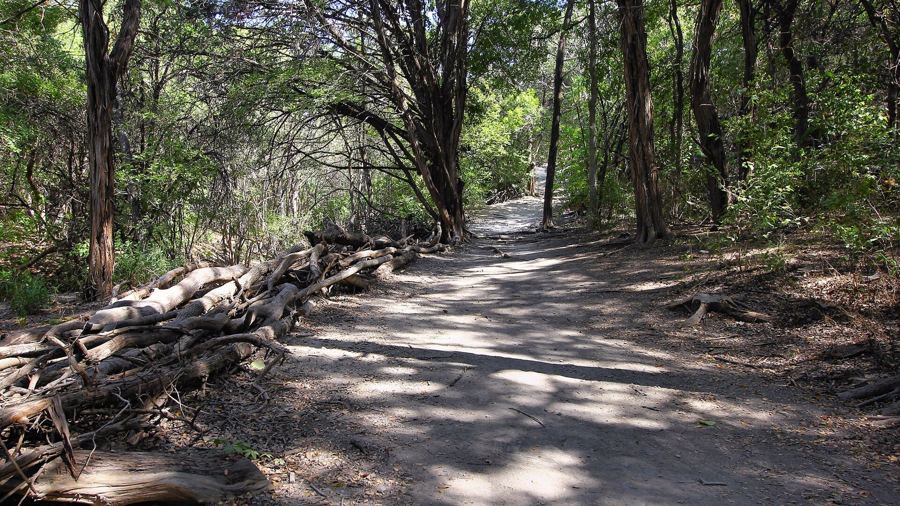
From the park, the greenbelt trail heads upstream into the valley. Within a few minutes the road noise fades, the trees close in and the path starts its pattern of crossing the creek, climbing a little over a rocky bank, then dropping back to the water. How far you go is up to you: a mile out and back is enough for a family; three or four miles takes you deeper into the quiet stretches.
The creek crossings
The defining feature of the Bull Creek trail is the water. The path crosses the creek several times, usually on stepping stones, rock shelves or simply through the shallows. When the creek is low, which is common in late summer, you can hop across with dry feet. After a wet spell the crossings can be ankle or knee deep, and the limestone under the water is slick with algae.
Wear shoes you do not mind getting wet, with good grip, and use a stick or a hand on the rock for balance. Never cross when the water is muddy, rising or fast. Bull Creek drains a large area of hills and responds quickly to storms; a crossing that was ankle deep in the morning can become dangerous within an hour of heavy rain upstream.
Ledges, pools and life in the water
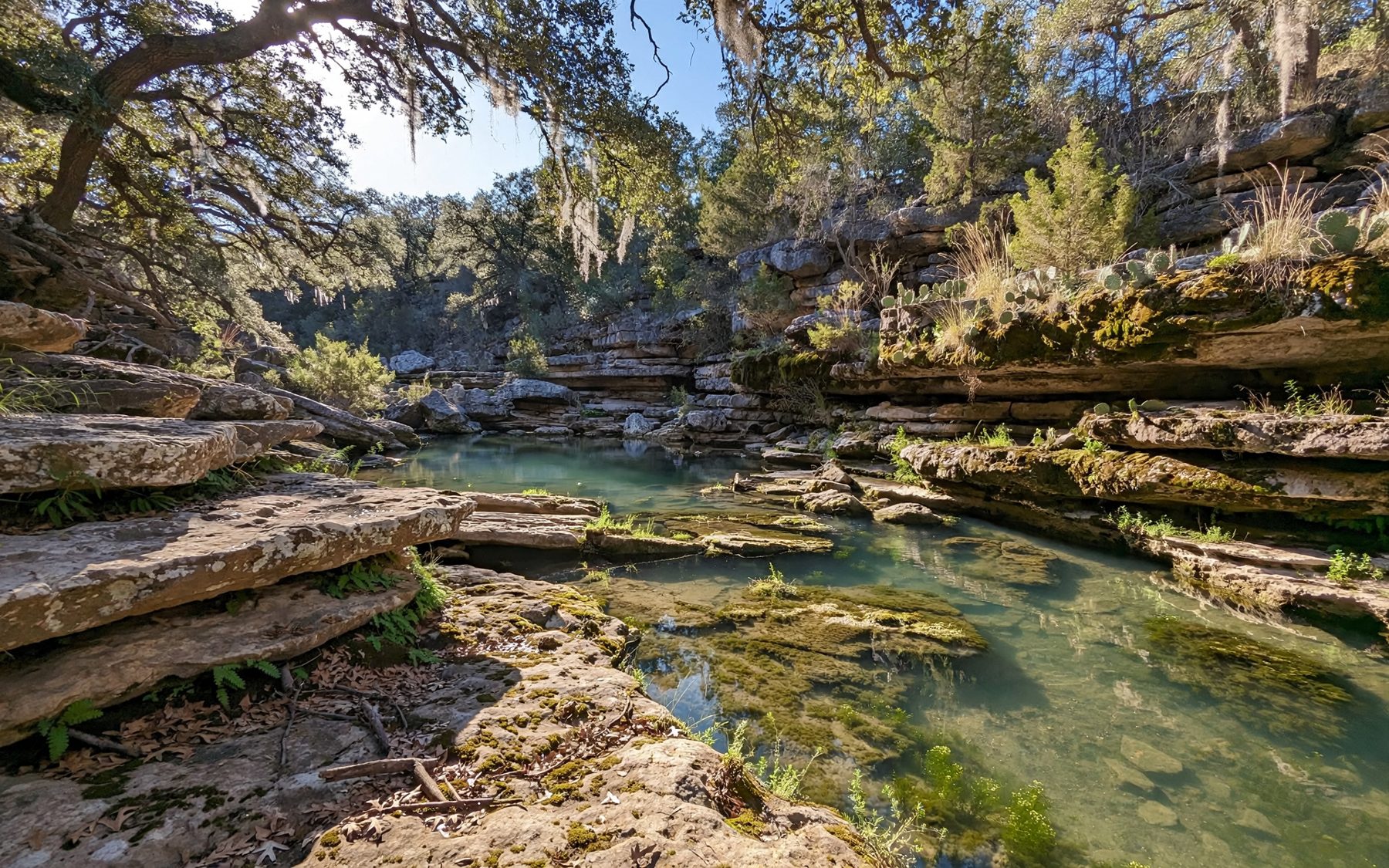
The creek is the reason to come, so slow down and look at it. The limestone was laid down as sediment in a shallow sea, and in places you can see fossil shells and the tracks of burrowing creatures in the rock. The water has cut it into shelves, potholes and smooth channels. In the deeper pools, small fish dart in the shade of the banks.
Bull Creek is also home to a creature most visitors will never see: the Jollyville Plateau salamander, a small, pale salamander that lives in the springs and spring-fed stretches of creeks in this corner of Austin and nowhere else. It is a federally protected species, sensitive to sediment and pollution. Keeping the water clean, staying on trails and not moving rocks in spring outflows all help it survive.
Never cross when the water is muddy, rising or fast.
Above the water, the valley is a mix of cedar, live oak, cedar elm and sycamore, with maidenhair fern on shady, dripping ledges. In spring, the woods ring with birdsong from the canopy overhead.
Sharing it well
Bull Creek is popular with dog owners, and rules about leashes vary along the greenbelt, so check the signs at the trailhead and in each section. Pick up after your dog and keep it under control near families and wildlife.
Swimming and wading are common, but there are no lifeguards. The city sometimes posts water-quality advisories after heavy rain, when runoff raises bacteria levels in urban creeks; avoid swallowing creek water and skip a swim after a storm. Glass containers are not allowed in many Austin parks, and there are no bins along the trail, so carry out what you carry in.
Parking at the district park fills fast on summer weekends, and cars parked illegally along Loop 360 are a hazard on a fast, winding road. Come early, or come on a weekday, and if the lot is full, try another day rather than squeezing onto the shoulder.
A wild creek inside a city
It is easy to forget, deep in the Bull Creek valley, that you are inside the city limits of one of the fastest-growing metro areas in the country. The ridges above the creek are lined with houses and roads, and the creek carries their runoff. That it still runs clear most of the year is not an accident.
Much of the land in the upper Bull Creek watershed is part of the Balcones Canyonlands Preserve, a system of protected tracts set aside by the city, the county and other partners from the 1990s onward. The preserve was created to protect endangered songbirds and cave creatures while allowing building elsewhere, and it has the side effect of keeping large areas of the watershed wooded. Many of those tracts are closed to the public or open only on guided outings, which is why the greenbelt trail and the city parks are the main ways in.
Volunteers and city crews spend a good deal of effort on the creek: removing invasive plants such as ligustrum and nandina, repairing eroded banks and picking up rubbish after floods. If you see a work day posted at the trailhead, it is one of the more rewarding ways to spend a morning here.
Other ways onto the creek
Upstream, another city park sits along Bull Creek off Spicewood Springs Road, with trails that climb through the woods above the water and a small waterfall over a dam on the creek. It is a quieter alternative to the district park and a good choice for a longer woodland walk.
Bull Creek also makes a natural pair with Walnut Creek Metropolitan Park to the east, which offers a network of shady dirt trails without the water crossings, and with Wild Basin to the south, a small preserve with its own creek and waterfall. For a gentler, paved creek walk, the Brushy Creek Regional Trail in Cedar Park is the place.
The best seasons for Bull Creek are spring, when the water usually runs well and the woods are green, and autumn, when the heat breaks and the crowds thin. In summer, go early: the creek keeps you cool, but by midday the parking lot and the open limestone shelves at the park are baking. In winter, after rain, the creek can be at its most beautiful, clear and full, with every ledge a small waterfall.