Creeks · Austin
Walnut Creek Metropolitan Park's shady web of trails
A big city park in north Austin hides miles of narrow dirt trails under oak and cedar elm, threaded along a creek. Walkers, runners, dogs and mountain bikes all share them.
A park that feels bigger than it is
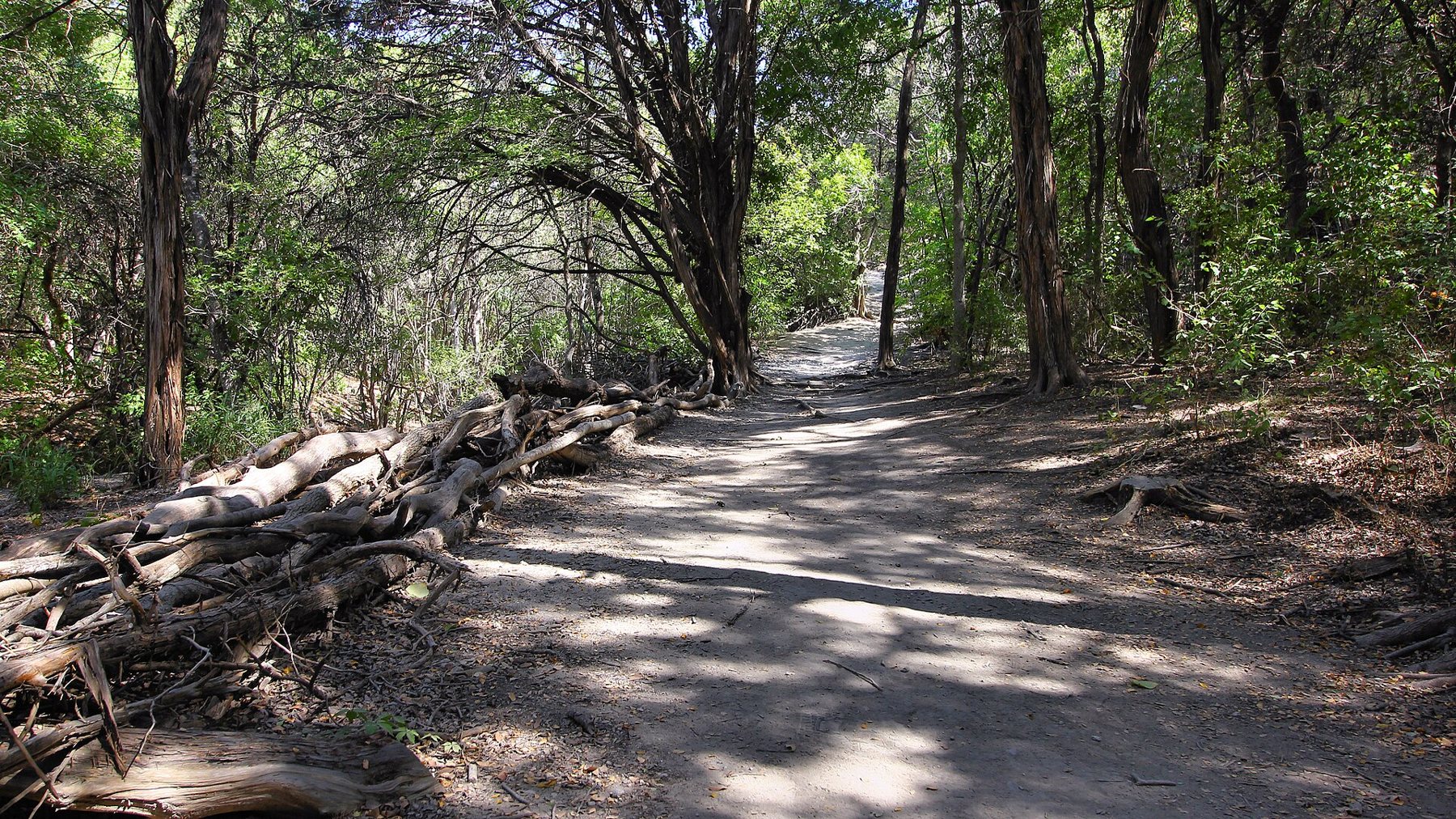
Walnut Creek Metropolitan Park sits in north Austin, a short drive east of the Lakeline area, surrounded on most sides by neighbourhoods, roads and offices. From the parking lot you would not guess what lies behind the playground and sports fields. Step into the trees, though, and you find a dense web of narrow dirt trails winding through woodland along Walnut Creek and its side channels. Add them all together and there are well over ten miles of paths in a park you could drive past in a minute.
The trails were largely shaped by mountain bikers, and the park is one of the best-known places in Austin to ride. Walkers and runners use the same paths, along with a great many dogs, and on a busy weekend morning the woods are full of people moving in every direction. On a weekday it can feel remarkably quiet.
Not getting lost in the loops
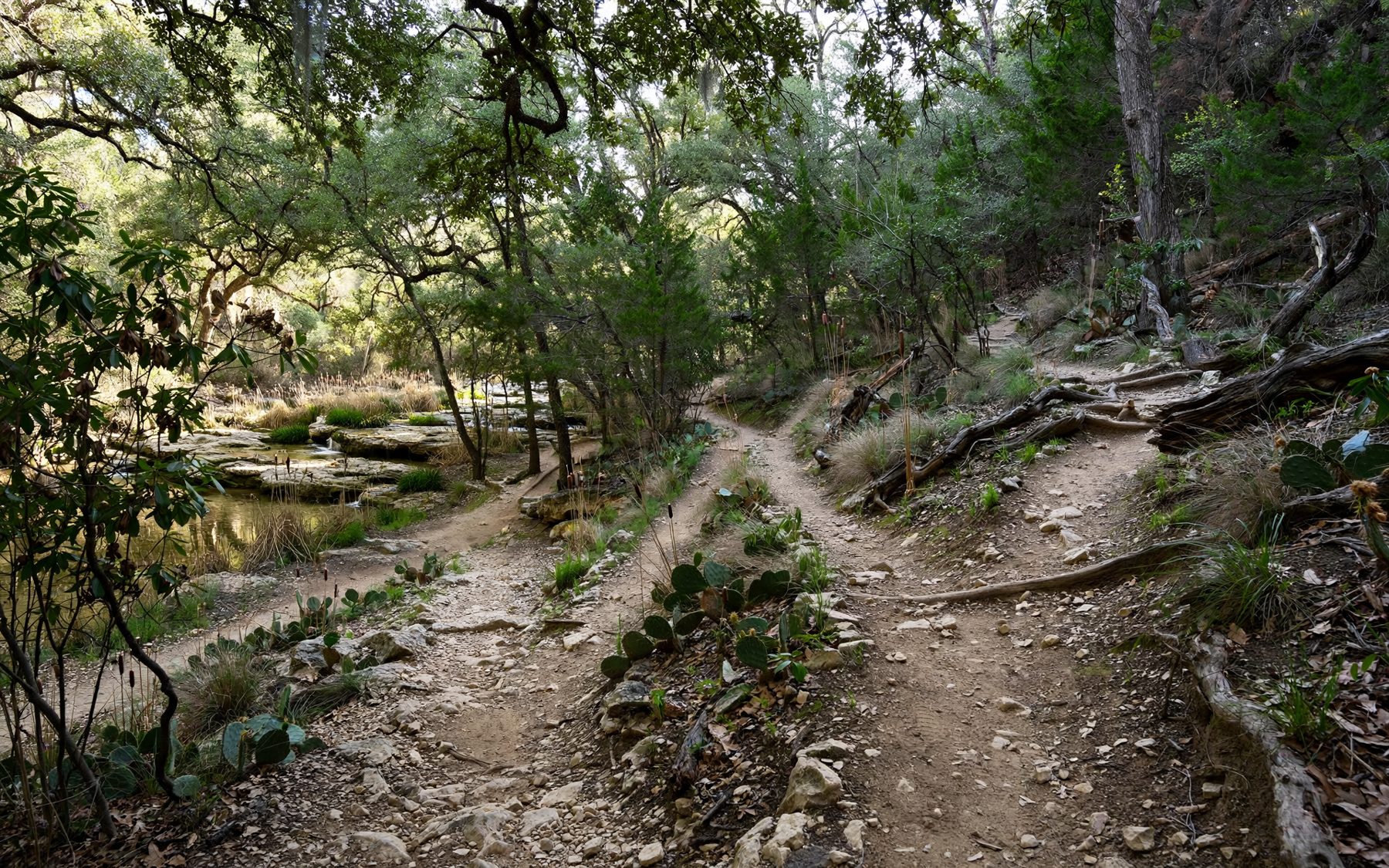
The trail network is not a single loop but a tangle of intersecting paths, some named and marked, many not. It is easy to get turned around, especially on the first visit. A few tips help:
- Carry a trail map on your phone or study one at the trailhead before you set off.
- Use the creek as a reference. The main trails run roughly parallel to it, and roads bound the park on its edges.
- Start with a short loop near the main parking area and widen your range on later visits.
- Tell someone your plan if you are heading out alone for a long run or ride.
Trail surfaces are packed dirt, roots, gravel and limestone ledges. Some sections are smooth and flowing; others have short, steep drops into the creek channels. Trail shoes or sturdy trainers are enough for walking.
The woods themselves are a typical central Texas creek bottom: cedar elm, hackberry, live oak and pecan near the water, with cedar on the drier slopes and thick undergrowth of yaupon and greenbriar. Poison ivy is common along the trail edges, so learn its three-leaf shape and keep to the path. In spring the understory fills with wildflowers in the sunnier gaps, and on warm evenings the woods are loud with cicadas.
Sharing with bikes
Because the park is so popular with riders, the most important skill here is awareness. Bikes come around blind bends fast and quietly. Walkers should keep to one side, keep dogs close, and step off the line when a rider approaches. Riders should slow at junctions, announce themselves and yield to walkers, as is the general rule on shared trails.
Many people treat some loops as mainly bike trails and others as mainly walking routes. Posted signs show any official direction or user restrictions, and they change from time to time as the city and volunteer groups manage erosion.
Mud, rain and closures
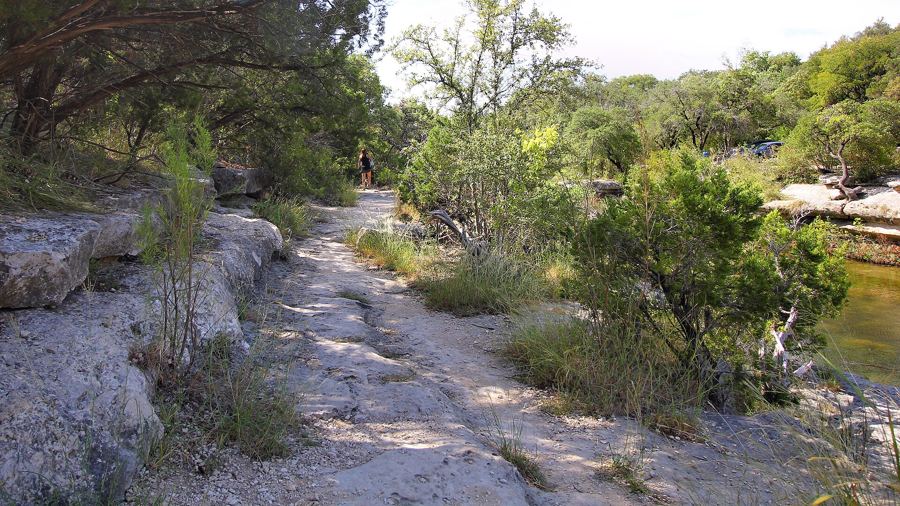
The dirt trails at Walnut Creek turn to sticky mud after rain, and riding or walking on them while wet causes ruts and erosion that take months to repair. The park sometimes closes the trails after storms until they dry out, and riders' groups post updates on trail conditions. Respect closures even if the trail looks dry at the entrance; the low areas near the creek hold water longest.
The creek itself floods after heavy rain, and low crossings within the park can be impassable. As on every creek in this part of Texas, never wade through fast or rising water.
Dogs and the creek
Walnut Creek has long been one of the city's favourite places for dogs. Part of the park has been set aside as an off-leash area, and dogs swim in the creek on hot days. Outside the designated area, leash rules apply, and they are enforced from time to time. The creek can carry high bacteria levels after rain, so it is wise to keep dogs out of the water for a few days after a storm.
Bring water for dogs in summer. The shade helps, but the humidity under the trees is heavy, and dogs overheat faster than people expect.
Beyond the singletrack
Not everything at Walnut Creek is singletrack. The park has open fields, a swimming pool run by the city in summer, playgrounds, picnic areas and restrooms near the main entrance. A paved hike-and-bike trail runs along the creek corridor beyond the park, linking it to neighbourhoods to the south and east, and it suits strollers and road bikes better than the dirt loops.
Facilities, pool hours and park rules are set by the city's parks department and change with the season, so it is worth checking before you rely on them.
Fitting it into the week
Walnut Creek works best as an everyday park: an hour's run before work, a ride after school, a dog walk on a cool evening. For a longer, wilder creek walk with water crossings, try Bull Creek to the west. For a paved, flat ride, the Brushy Creek Regional Trail in Cedar Park is the better choice, and for big views, head out to the hills at Warbler Vista.
What Walnut Creek offers is shade and variety close to home. In a city where so much of the outdoors is open and sun-baked, a wood thick enough to get lost in, a few minutes from a shopping centre, is a rare and valuable thing for the north side of the city.