Heat and bloom · Northwest Austin
Hiking the northwest hills in a Texas summer
From June to September the heat, not the distance, decides how far you can walk here. A plain guide to timing, water, shade, dogs and the storms that end a dry spell.
Summer in central Texas is long, bright and very hot. From June to September daytime highs in the upper nineties and above are routine, the nights stay warm, and the limestone and granite of the hills store heat and give it back long after sunset. People still hike, ride and paddle through it, but the ones who do it well treat the heat as the main feature of the day and plan everything else around it.
Start in the dark, finish by ten
The single most useful habit is an early start. In midsummer the coolest part of the day is the hour before sunrise. Arriving at a trailhead as it opens, or at first light if hours allow, gives you two or three hours of tolerable temperatures. By mid-morning the sun is high and the rock is heating; by noon, exposed trails can be dangerous.
Evening walks are possible too, but the ground stays hot into the night, the air is often more humid, and many parks and preserves close at sunset. Morning is almost always better.
Choose shade on purpose
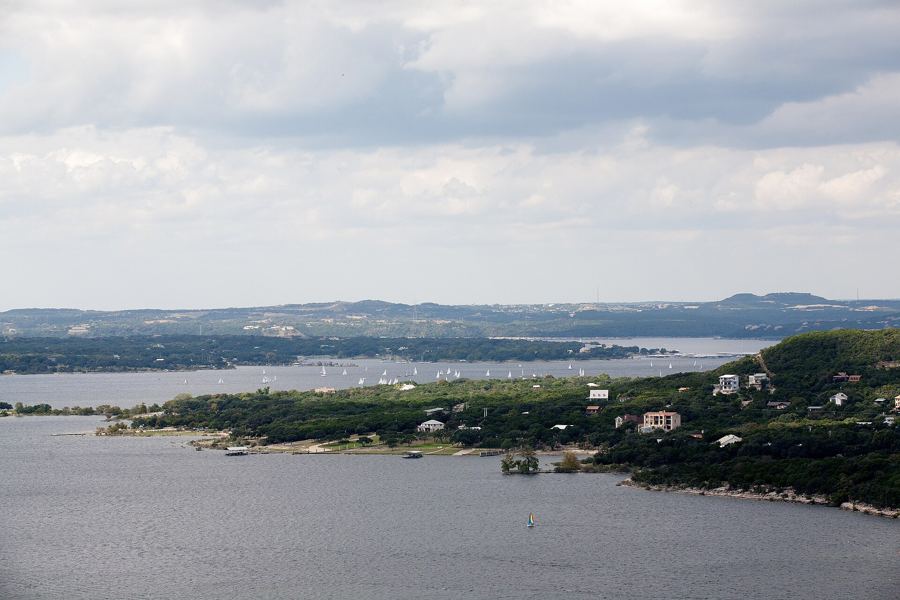
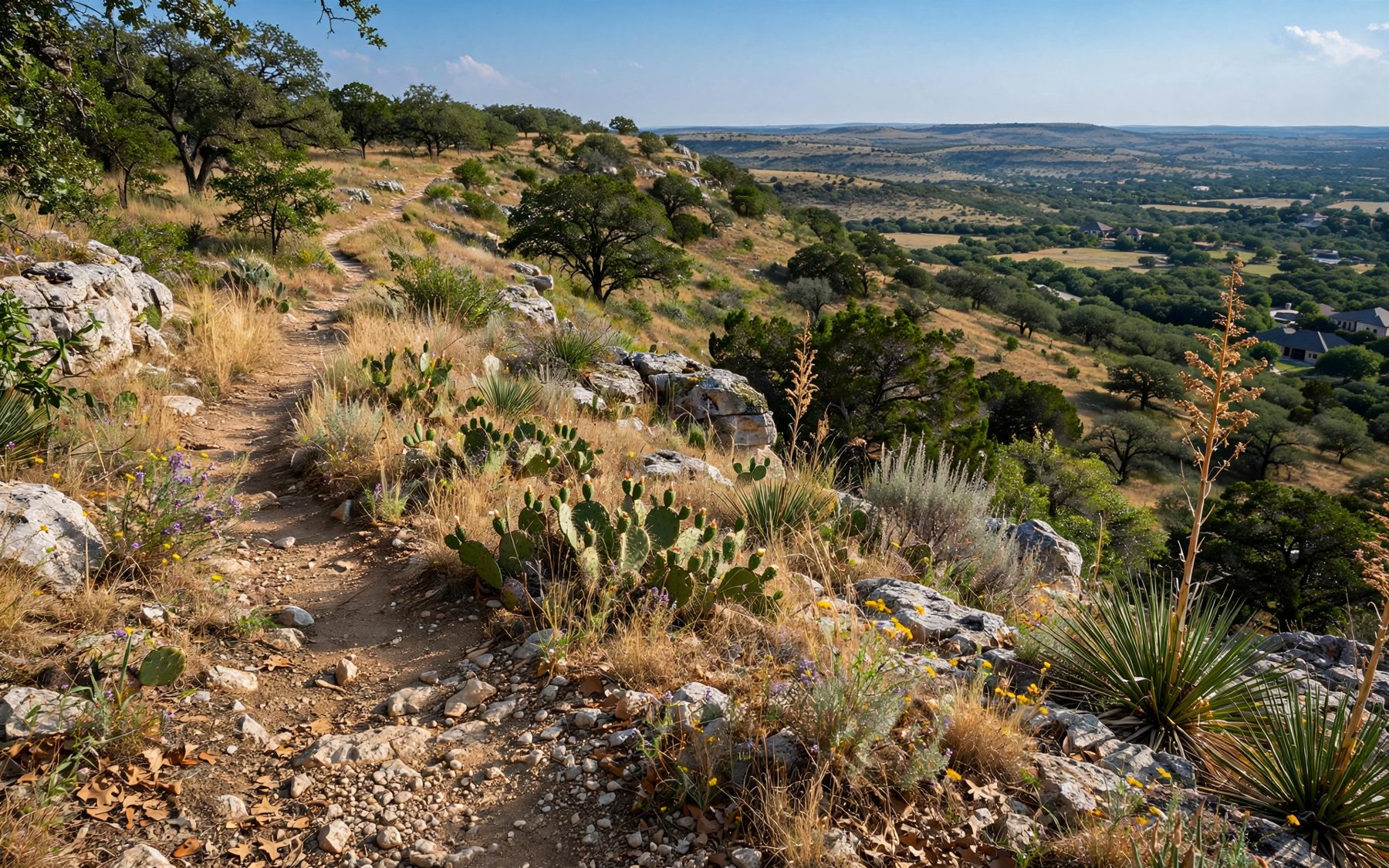
The trails on this board differ hugely in how much shade they give, and that matters more in July than any difference in length. Creek greenbelts such as Bull Creek and the woodland loops at Walnut Creek stay shaded most of the way and have water nearby. Open prairie, rimrock and granite, like parts of Doeskin Ranch and Inks Lake, have almost none.
Use the shade marks on the trail board to choose. Save the open, high-ground walks for October to May, and use the hot months for creeks, woods and water. Going underground is another answer: Longhorn Cavern stays cool all year.
Water, salt and how much
Carry more water than seems sensible. A rough guide for hot weather is at least half a litre to a litre per hour of walking, more for hard effort or full sun, and always some left over for the walk back. There is no drinking water on most trails in this area.
Drinking only water for hours can leave you short of salt. Bring salty snacks or an electrolyte drink on longer outings. Freeze a bottle overnight so you have something cold later on. Leave extra water in the car for the end of the walk.
Knowing the warning signs
Heat illness creeps up on people, and it can affect fit walkers as easily as anyone else. Heat exhaustion often shows as heavy sweating, cramps, weakness, dizziness, headache or nausea. If you or a companion feels this way, stop, get into shade, drink, cool the skin with water and turn back.
Heat stroke is a medical emergency. Confusion, slurred speech, very hot skin, collapse or seizures mean the body is losing control of its temperature. Call emergency services, move the person to shade and cool them as fast as possible with water and fanning.
Children, older people and anyone with health conditions are more vulnerable. Plan shorter routes, take more breaks and watch each other.
Dogs on hot ground
Dogs suffer in Texas heat faster than people, because they cool themselves mainly by panting. Pavement, granite and bare limestone can burn their pads. Test the ground with the back of your hand: if you cannot hold it there for a few seconds, it is too hot for paws.
Walk dogs very early, keep them in shade, let them swim where it is allowed and safe, and carry water and a bowl for them. On the hottest days, leave them at home in the cool.
When the storms come
Summer heat often ends in thunderstorms, and central Texas is one of the most flash-flood-prone regions in the country. Steep hills, thin soils and limestone send rainwater rushing into creeks within minutes. Trails beside creeks and low-water crossings on roads can flood very quickly, even when it is not raining where you stand.
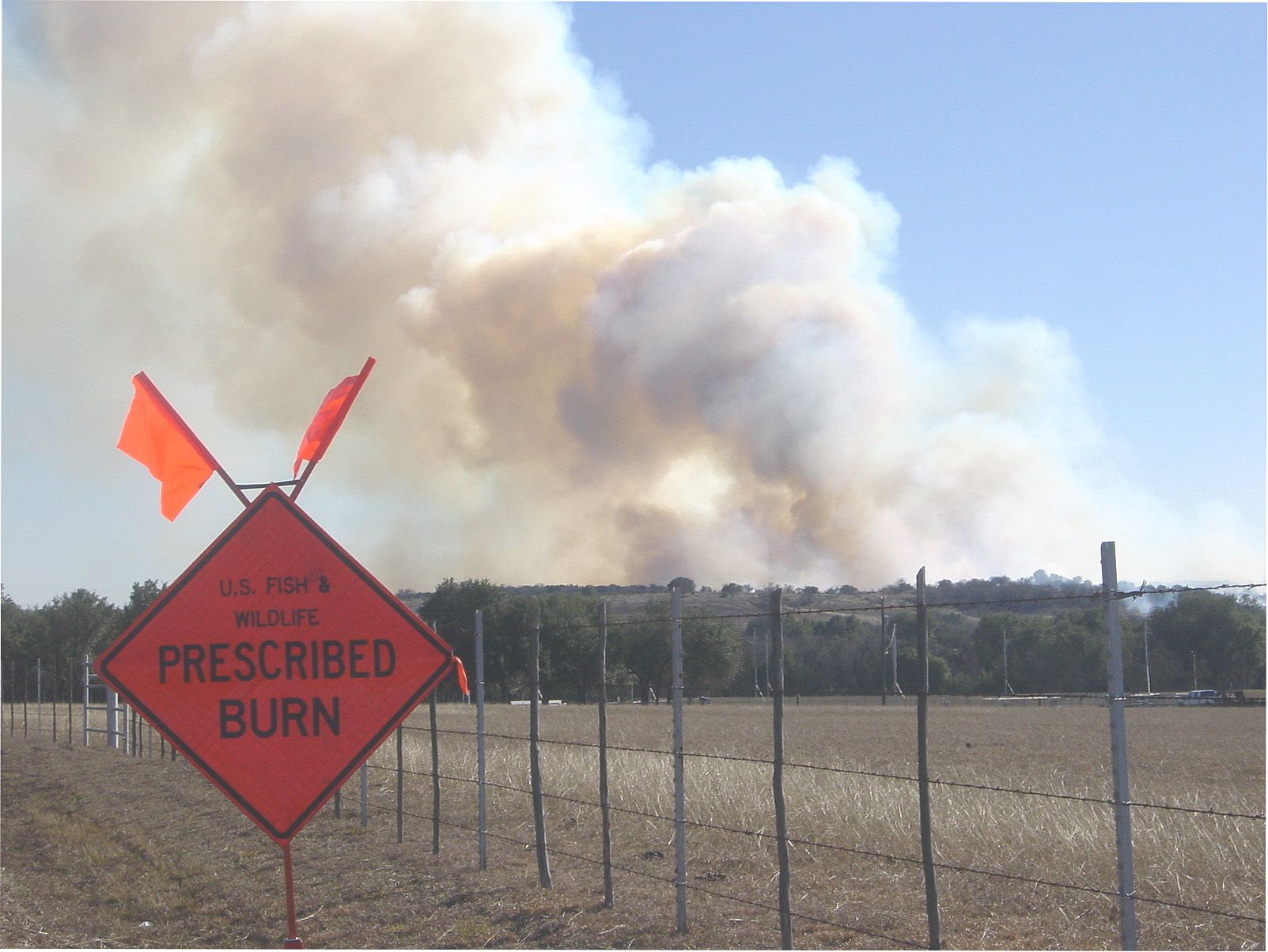
Watch the forecast, keep an eye on the sky and turn back early if storms are building. Never walk or drive into moving water; a few inches can knock you off your feet, and a foot or two can float a car. Dry, hot spells also bring burn bans and wildfire risk, so obey fire restrictions and never toss a match or cigarette.
Gear that earns its weight
A few simple items make a summer outing much safer and more comfortable:
- A wide-brimmed hat and light, loose clothing in pale colours. Long sleeves of thin fabric can be cooler than bare skin in full sun.
- Sunscreen, reapplied, and sunglasses for the glare off pale rock and water.
- A cotton bandana or small towel to soak in water and wear round the neck.
- Insect repellent for mosquitoes near creeks, and long socks for ticks and chiggers in tall grass.
- A charged phone, with someone at home knowing your route and return time.
Look out for wildlife that is active in the warm months as well. Rattlesnakes and copperheads move about in the cooler hours, especially at dawn and dusk; watch where you step and where you put your hands on ledges. Fire ant mounds dot open ground. None of this is a reason to stay home, only a reason to keep your eyes on the trail.
The hills north-west of Austin are worth walking all year. In summer they simply ask you to be early, carry water and listen to your body. Do that, and a July sunrise on a shaded creek can be one of the best walks of the year.