Heat and bloom · Hill Country
Spring bloom on the hills north of Austin
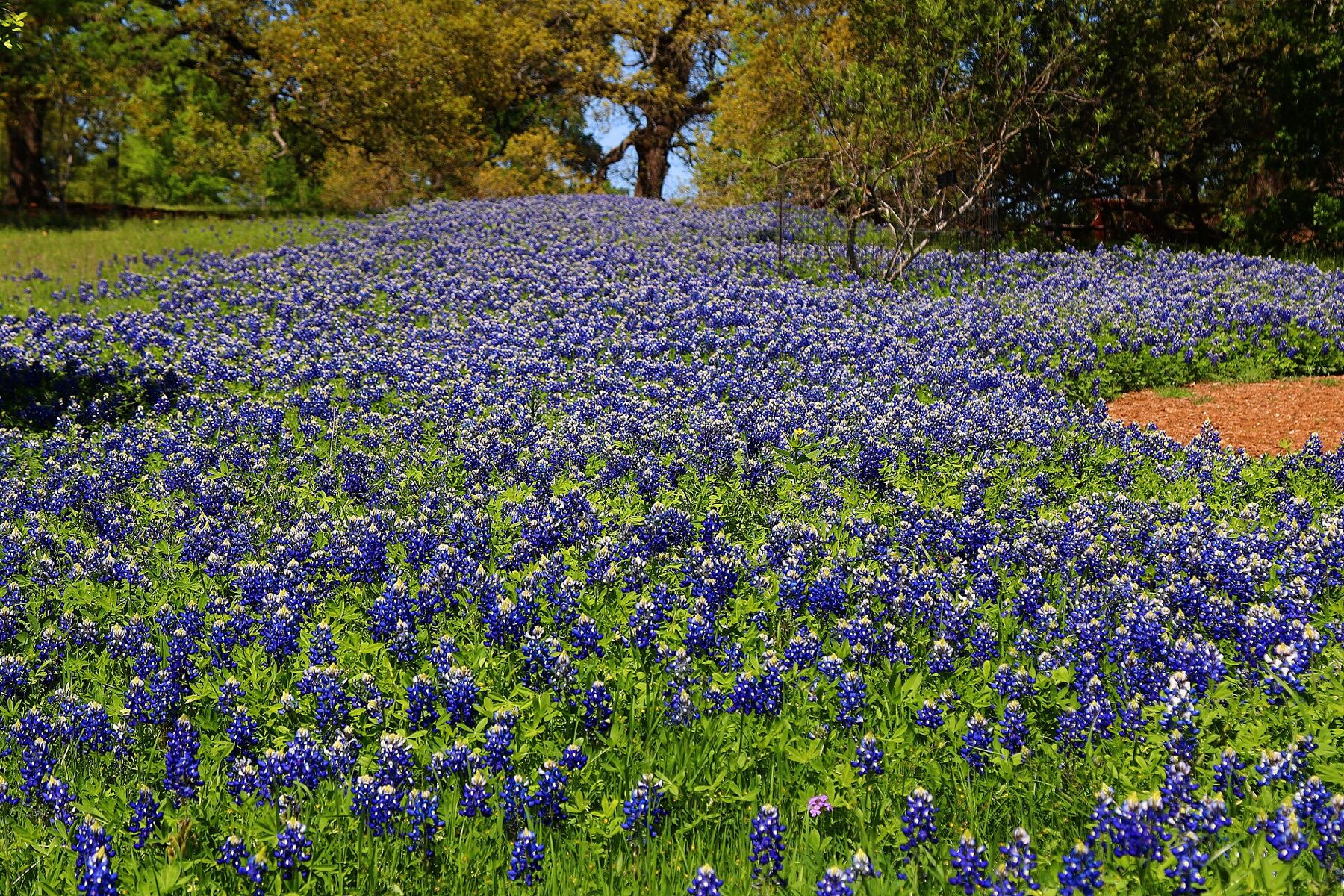
For a few weeks each spring the verges, prairies and lakeshores north of Austin turn blue and red. Whether a spring is spectacular is decided by the rains of the autumn before.
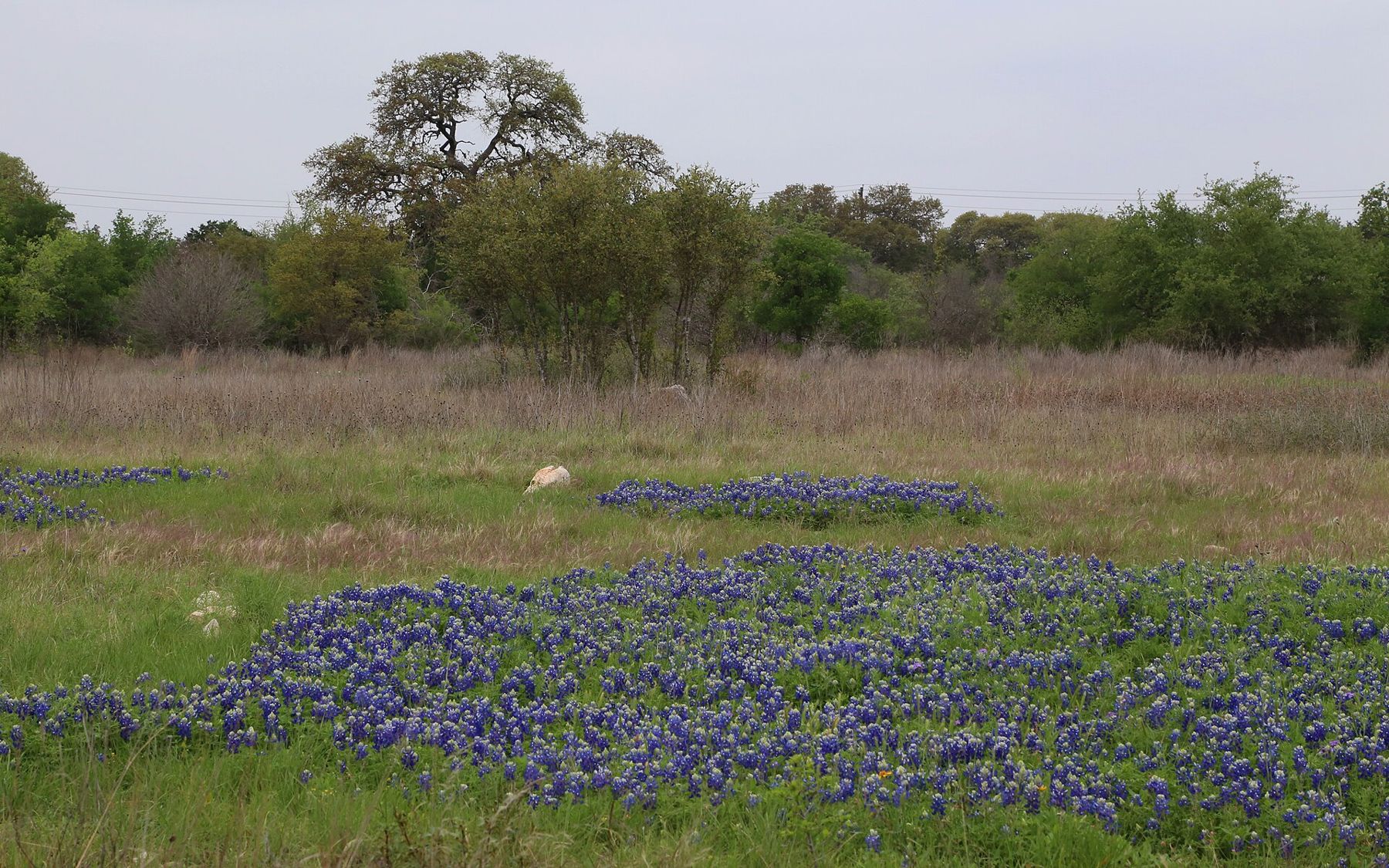
Ask anyone in central Texas when the hills are at their best and most will name the same few weeks: the stretch from late March into April when the bluebonnets are out. Along the roads north and west of Austin the verges turn a deep blue, mixed with the orange-red of Indian paintbrush, and fields that were brown all winter suddenly have colour from fence to fence. It does not last long, and it is never quite the same two years running.
The bluebonnet has been the state flower since 1901. The original choice named one species, a sandy-soil bluebonnet from further south and east; the lawmakers later widened the designation to cover all the Texas lupines, which settled a long argument. The one you see on the limestone hills around Austin is the Texas bluebonnet, the tallest and showiest of them, with a white tip on each flower spike that turns pinkish as the flowers age and stop offering nectar.
Why some springs are spectacular
The Texas bluebonnet is an annual. Its seeds germinate in autumn, after the first good rains, and the young plants spend the winter as low rosettes of leaves pressed against the ground. If autumn is dry, fewer seeds sprout; if winter is very cold or very dry, fewer rosettes survive. A wet autumn followed by a mild winter and some spring rain produces the famous years, when whole hillsides turn blue.
That means the best guide to a good bloom is not the spring forecast but the previous October and November. In drought years the show can be thin and patchy, with flowers only along ditches where water collects. In good years it starts on the warmest, south-facing ground in March and moves across the landscape for several weeks.
The seeds themselves are hard-coated and can lie in the soil for years, waiting for a good autumn. A field that disappoints one spring may be extraordinary the next.
What else blooms with them
Bluebonnets rarely bloom alone. The most common companion is Indian paintbrush, whose bright orange-red bracts look like the tips of a brush dipped in paint, and the two together make the classic Texas roadside. Pink evening primrose spreads across verges a little later, along with white prickly poppy and the deep magenta cups of winecup.
As April turns to May, the blues fade and the yellows and reds take over: Indian blanket, also called firewheel, coreopsis and Mexican hat. By late May and June the roadside colour is mostly gone in the heat, apart from scattered patches after rain.
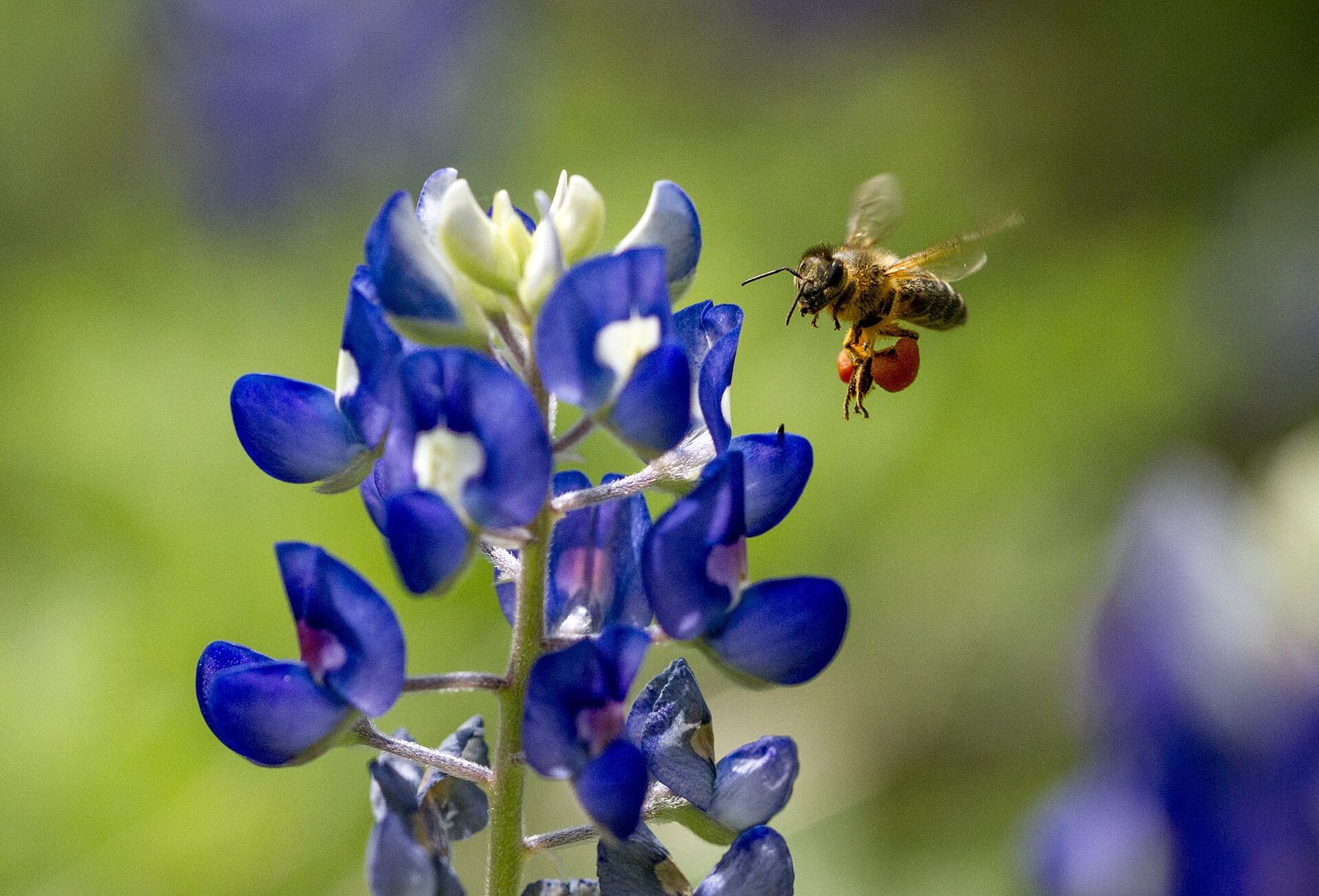
Look closely at a single bluebonnet spike and you will see the mechanism behind the colour. Each small flower has a white or pale yellow spot, a signal to bees that it is open for business. Once a flower is pollinated, the spot fades to red or purple, and bees learn to skip it. Watch a patch on a warm morning and you can see them working their way up the fresh tips.
Where to look north of Austin
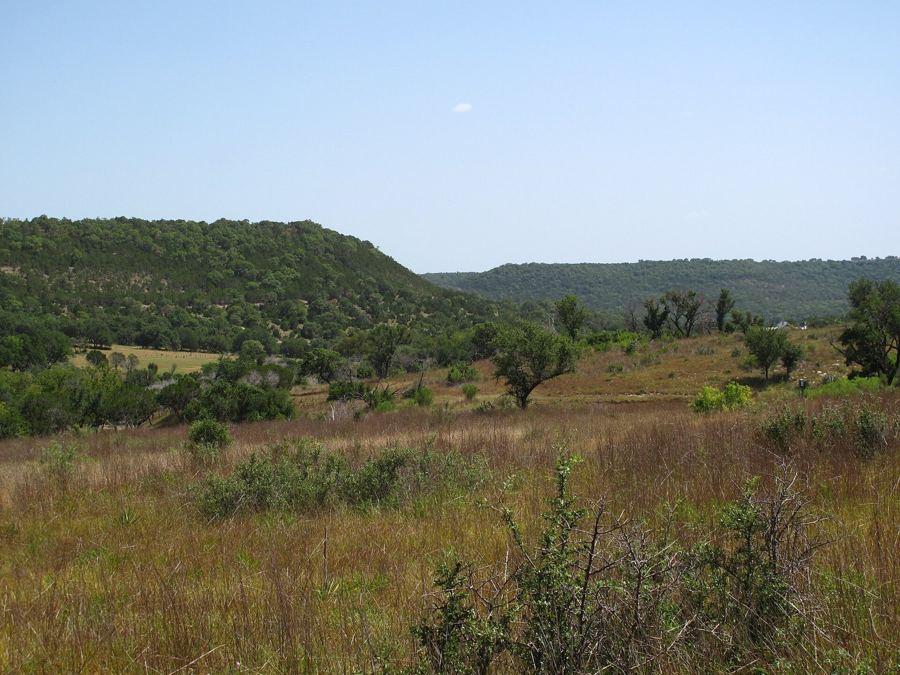
You do not need to drive far. The verges of the farm-to-market roads west of Cedar Park and Leander, especially along FM 1431 and Highway 29, often carry good displays, partly because the state highway department has sown wildflower seed on rights-of-way for decades and delays mowing until the seeds have set. The open prairie at Doeskin Ranch in the Balcones Canyonlands refuge has its own spring flowers along the trails.
On Lake Travis, Muleshoe Bend, a lakeside recreation area on the south shore, became widely known for its bluebonnet fields in good years. City parks around Georgetown and along the Brushy Creek Regional Trail have patches too, and they are easier to reach with children.
For a guaranteed display in a garden setting, the Lady Bird Johnson Wildflower Center in south-west Austin, a botanic garden run by the University of Texas, plants native wildflowers on a large scale. It is outside this guide's corner of the city, but it is the best place to learn to tell the species apart before heading out into the hills.
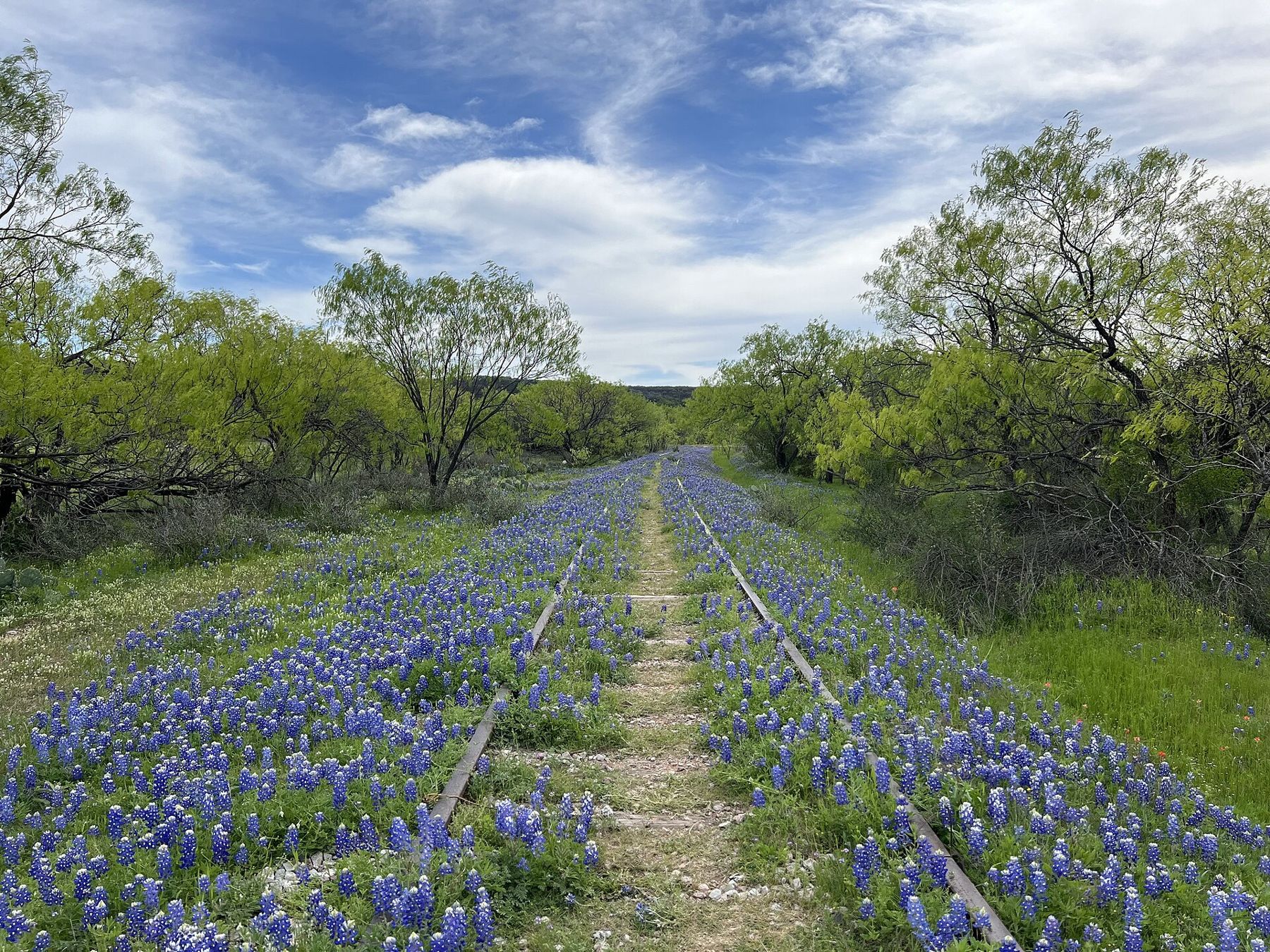
A wet autumn followed by a mild winter and some spring rain produces the famous years, when whole hillsides turn blue.
Roadside manners
Every spring the same scene repeats on busy roads: cars pulled half onto the verge, families wading into the flowers for photographs. A few rules keep that safe and fair:
- Pull completely off the road, only where there is a proper shoulder, and never on a blind bend or a narrow two-lane stretch.
- Most of the best fields are private land. Stay outside fences and gates; the verge belongs to the road, the field does not.
- In state parks and wildlife refuges, picking plants is not allowed. Elsewhere, leave the flowers so they can set seed for next year.
- Step carefully. Trampled patches do not reseed, and a field full of footpaths looks worse every year.
- Watch for fire ants and snakes in tall grass, and check for ticks afterwards.
There is a persistent story that picking bluebonnets is illegal everywhere in Texas. It is not true in general, but trespassing, damaging highway plantings and taking plants from parks are another matter, and it is simplest to take nothing but photographs.
Timing your weekend
Peak bloom usually falls somewhere between the last week of March and the middle of April near Austin, a little later on higher, cooler ground to the north and west. Early-blooming patches appear on warm slopes in March; late ones linger in shady spots into late April. Local news and park pages report on the bloom each year, and it is worth a quick look before you drive.
If a cold snap or a dry March holds things back, the peak can slip a week or more. Weekday mornings are calmest. The light is softer before mid-morning, the flowers are fresher, and the roads are quieter. By the afternoon on a warm weekend, popular spots can be crowded and parking scarce.
A spring loop from Lakeline
A good morning drive starts west on FM 1431 towards Lago Vista with a stop at Warbler Vista to listen for newly arrived warblers, then loops north through the back roads to Highway 29, watching the verges as you go, and returns through Leander. In a strong year you will see bluebonnets for most of the way. In a weak year the songbirds and the green of the new oak leaves make the drive worth it anyway.
Whatever the bloom, carry water and sunscreen. Spring in central Texas can be warm by noon, and the best fields are always in full sun.